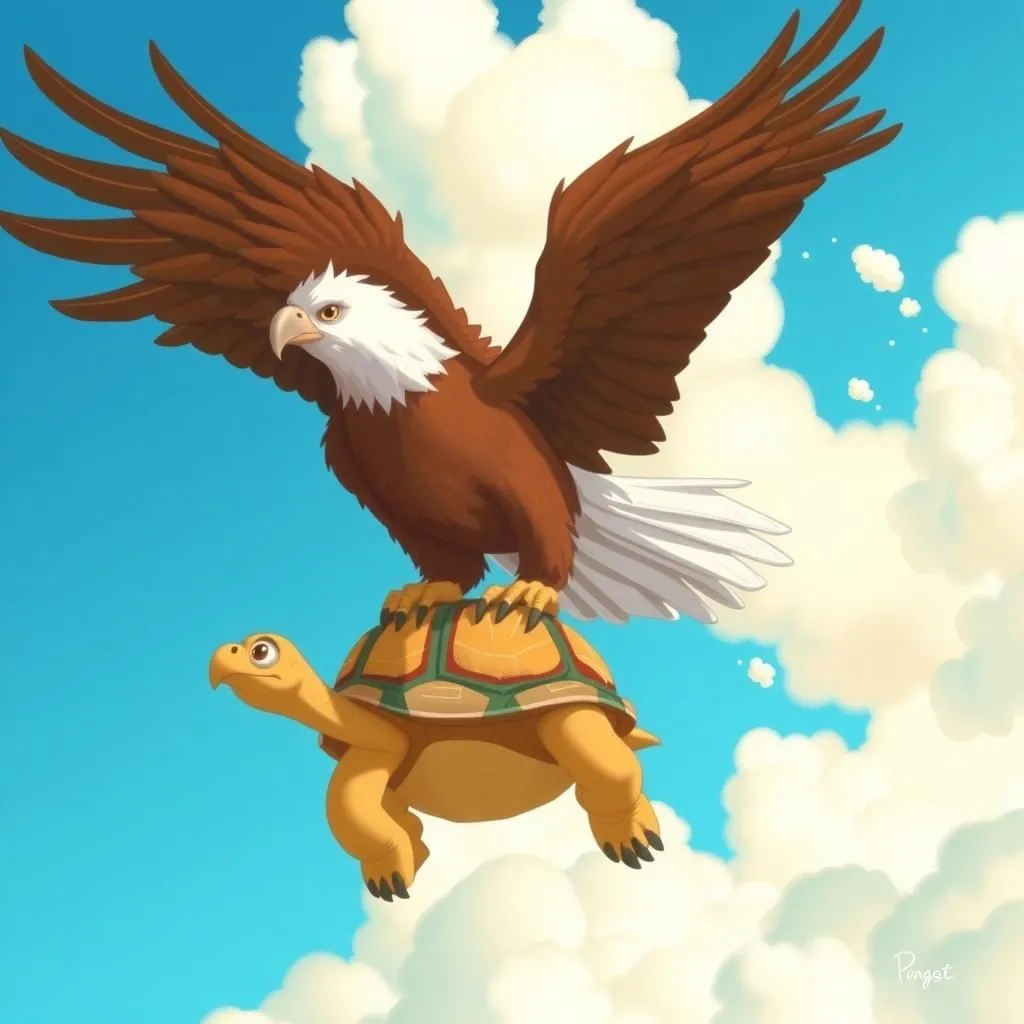

The Tortoise and the Eagle

Story Summary
In "The Tortoise and the Eagle," a tortoise yearning to fly persuades an eagle to teach her, promising riches in return. However, when the eagle drops her from great heights, she realizes too late that her aspirations were beyond her abilities, leading to her demise. This very short moral story serves as a wisdom-packed reminder for young readers that aspiring for what one cannot handle can often lead to ruin.
Click to reveal the moral of the story
The moral of the story is that aspiring for things beyond one's natural abilities can lead to disastrous consequences.
Historical Context
This fable, attributed to Aesop, a storyteller from ancient Greece, reflects themes of ambition and the consequences of overreaching desires. Aesop's fables have been retold and adapted across cultures, often emphasizing moral lessons such as the dangers of envy and the importance of knowing one’s limitations. The narrative highlights a universal caution against aspiring to attain what is inherently unsuitable or unattainable, resonating with similar moral tales found in various traditions worldwide.
Our Editors Opinion
This fable illustrates the danger of aspiring for unattainable goals without recognizing one's limitations, a lesson that resonates in modern life where social media often glamorizes the pursuit of unrealistic dreams. For instance, a young professional might envy the seemingly perfect life of influencers and strive to achieve the same level of success without the necessary skills or preparation, ultimately leading to disappointment and burnout, much like the tortoise who desired to fly without the capability.
You May Also Like

Two Politicians
In "Two Politicians," a short tale with moral undertones, two politicians reflect on the elusive nature of gratitude in public service. One yearns for citizen appreciation, while the other cynically observes that such recognition can only be achieved by leaving politics. Ultimately, they share a moment of understanding and decide to be content with their positions, humorously swearing to accept their access to public funds, illustrating the moral lesson found in many famous fables.

The Dog Who Lost His Prey for a Shadow
In Aesop's classic moral story, "The Dog Who Lost His Prey for a Shadow," a dog foolishly drops its actual prey to chase after its reflection in the water, nearly drowning in the process. This entertaining tale serves as a cautionary lesson on the dangers of greed and the deception of appearances, making it a standout in short story collections with moral lessons for young readers. Aesop's fables remain among the top 10 moral stories, highlighting timeless truths about human nature.

Mercury and the Workmen
In the humorous moral story "Mercury and the Workmen," a woodworker loses his axe in a river and, displaying honesty, is rewarded by Mercury with a golden and silver axe. However, when another worker tries to deceive Mercury by throwing his axe into the water, he is punished for his greed and ends up with nothing. This unique moral story illustrates the importance of honesty and the consequences of deceit, making it a valuable lesson for students.
Other names for this story
The Tortoise's Flight, The Eagle's Lesson, Wings and Wealth, A Tortoise's Dream, The Price of Ambition, Cloudbound Tortoise, Lessons from the Sky, Tortoise vs. Eagle
Did You Know?
This fable illustrates the theme of ambition and the dangers of overreaching, highlighting that desires beyond one's natural abilities can lead to self-destruction, much like the tortoise's fatal aspiration to fly. It serves as a cautionary tale about the importance of recognizing and accepting one's limitations.
Subscribe to Daily Stories
Get a new moral story in your inbox every day.