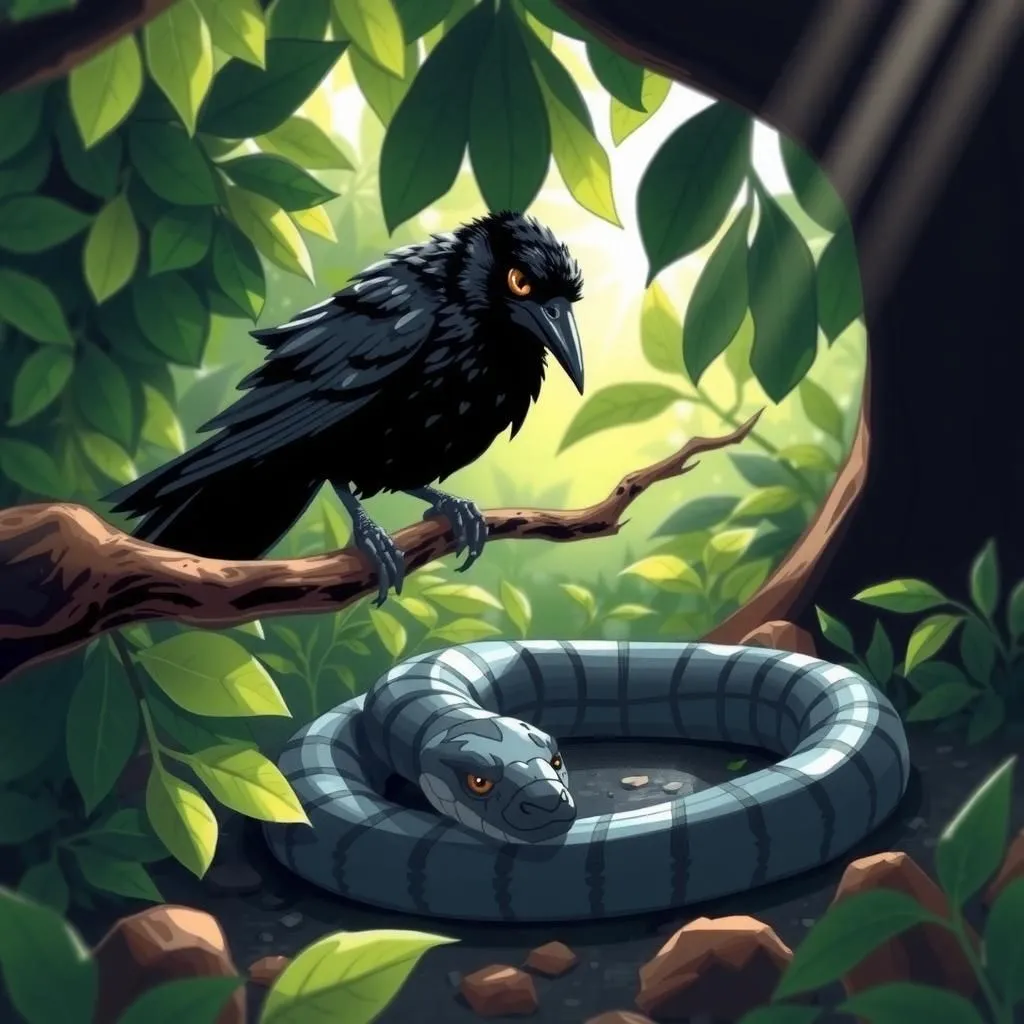

The Crow and the Serpent

Story Summary
In "The Crow and the Serpent," a timeless moral story, a hungry crow mistakenly believes he has found a fortunate meal in a sleeping serpent. However, the serpent's fatal bite leads to the crow's demise, teaching a valuable lesson about the dangers of greed and misjudgment. This meaningful tale serves as a reminder that what appears to be a lucky opportunity can sometimes be a source of destruction in real-life stories with moral significance.
Click to reveal the moral of the story
Be cautious of what appears to be a fortunate opportunity, as it may lead to your downfall.
Historical Context
This fable, attributed to Aesop, reflects themes found in ancient Greek storytelling, where animals embody human traits to convey moral lessons. The tale warns against greed and the dangers of underestimating potential threats, echoing similar motifs in various cultures, such as the cautionary tales found in Indian Panchatantra and other folklore traditions. Aesop's fables have been retold and adapted throughout history, emphasizing their enduring relevance in illustrating the complexities of human nature.
Our Editors Opinion
This fable illustrates the dangers of greed and the unforeseen consequences of our choices, a lesson that resonates in today's fast-paced world where instant gratification often leads to perilous outcomes. For instance, a person might impulsively invest in a high-risk stock that promises quick returns, only to suffer significant financial loss when the market turns, realizing too late that their greed overshadowed prudent judgment.
You May Also Like

The Widow and the Sheep
In this entertaining moral story, a poor widow attempts to shear her only Sheep herself to save money, but her clumsiness results in injuring the animal instead of simply taking its fleece. The Sheep wisely points out that while she aims to minimize expenses, her actions lead to greater suffering. This simple short story with moral teaches that the least outlay is not always the greatest gain, a lesson often found in popular moral stories and engaging moral tales.

The Spendthrift and the Swallow
In this cautionary tale, a young spendthrift squanders his inheritance and, mistaking an early Swallow's arrival for the arrival of summer, sells his last cloak. When winter returns and the Swallow lies dead, he realizes that both their fates were sealed by the premature hope inspired by the bird's early appearance. This story serves as an important moral lesson, illustrating the dangers of acting impulsively and the consequences of misplaced optimism.

The Salt Merchant and His Ass
In this quick moral story, a peddler's Ass attempts to lighten its load of salt by intentionally falling into a stream, but the clever peddler sees through this trick and replaces the salt with sponges. When the Ass falls again, the sponges absorb water, resulting in a double burden instead of relief. This folklore teaches a meaningful lesson on the consequences of deceit in life-changing stories with moral implications for students.
Other names for this story
"Fatal Feast, The Crow's Regret, Serpent's Bite, Perilous Meal, The Deceptive Prize, Death from Desire, The Crow's Downfall, Lethal Lure"
Did You Know?
This fable illustrates the theme of the dangers of greed, as the Crow's desire for an easy meal leads to its demise, highlighting the idea that what may initially seem like a blessing can sometimes turn out to be a curse.
Subscribe to Daily Stories
Get a new moral story in your inbox every day.