Story Summary
Discover the Zen story The Moon Cannot Be Stolen, where Master Ryokan teaches a thief about true wealth through a selfless act of compassion and detachment.
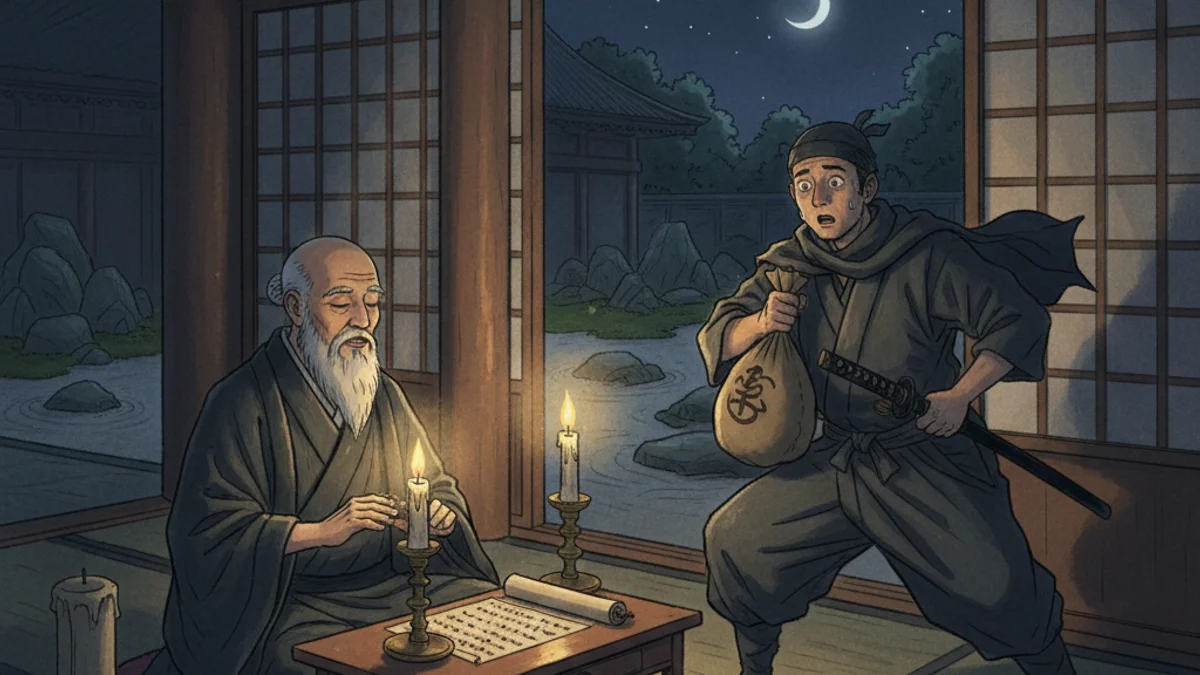
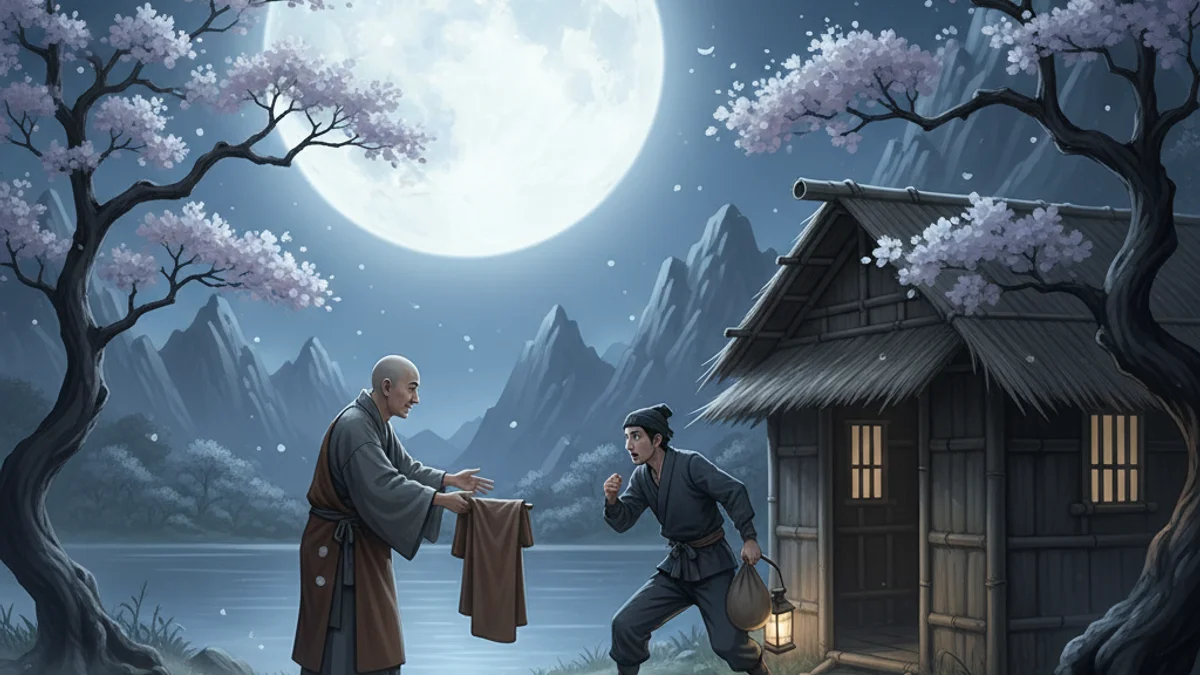
Ryokan, a Zen master, lived a very simple life in a small hut at the foot of a mountain. One evening, a thief entered the hut only to discover there was absolutely nothing to steal. Ryokan returned and caught the man in the act. 'You may have come a long way to visit me,' Ryokan told the prowler kindly, 'and you should not return empty-handed. Please take my clothes as a gift.' The thief was bewildered, but he took the clothes and slunk away into the night. Ryokan sat naked, watching the luminous orb in the sky. 'Poor fellow,' he mused, 'I wish I could have given him this beautiful moon.'
The Moral
True abundance is found in spiritual peace and the beauty of nature, which can neither be stolen nor owned.
“Poor fellow, I wish I could have given him this beautiful moon.”
Fun Fact
Ryokan Taigu, the protagonist, was known as the 'Great Fool' because he preferred playing games with village children over seeking fame or religious status.
Frequently Asked Questions
What is the moral of The Moon Cannot Be Stolen?
The moral is that material possessions are insignificant compared to the wealth of the spirit. It teaches that true beauty and enlightenment, like the moon, are universal and cannot be taken by force.
Who was Ryokan in this Zen story?
Ryokan Taigu was a historical Zen Buddhist monk who lived in 18th-century Japan. He was famous for his simple lifestyle, his poetry, and his profound compassion toward all living beings.
What does the moon symbolize in Zen Buddhism?
In Zen, the moon often symbolizes enlightenment, truth, and the Buddha-nature. It represents a reality that is accessible to everyone but cannot be possessed or manipulated.
Why did Ryokan give his clothes to the thief?
Ryokan gave his clothes to show compassion to the thief and to demonstrate his total lack of attachment to material things. He wanted the visitor to leave with something rather than feeling the shame of a failed robbery.
Is The Moon Cannot Be Stolen based on a true story?
While it functions as a teaching parable, it is based on the life of the real monk Ryokan, who was well-known for his extreme poverty and his gentle, eccentric nature.
How can we apply this story to modern life?
It encourages us to find happiness in things that cannot be bought or sold, such as nature and inner peace. It also suggests responding to negativity or aggression with unexpected kindness.
Discussion (0)
Share your thoughts on this story
No comments yet. Be the first to share your thoughts!