
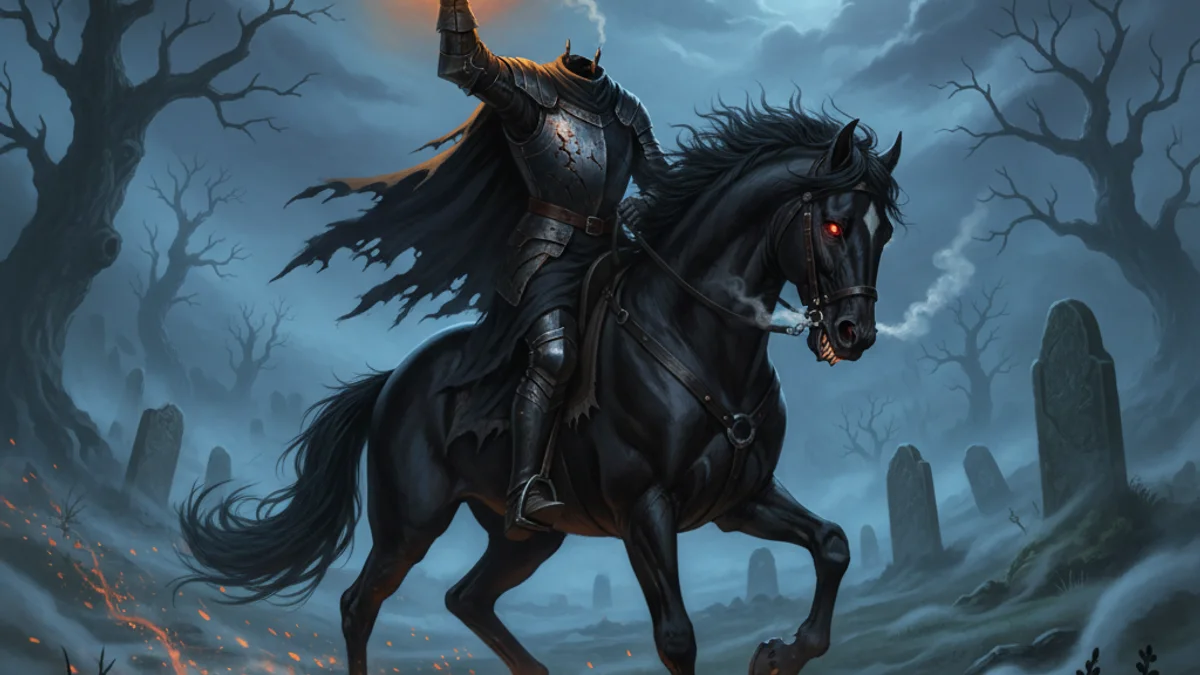
In the deep shadows of the Irish countryside, the Dullahan rides—a headless harbinger of doom clad in flowing black. He sits atop a stallion as dark as the void, his own severed head held high in his right hand to light the way through the mist. The head possesses the texture of stale cheese, with eyes that dart about like insects and a mouth stretched into a permanent, hideous grin. As he gallops, he lashes a whip made from a human spinal cord. Doors and gates fly open at his approach; no lock can bar his path. The Dullahan stops only when a soul is meant to depart. Once he halts, he speaks a single name aloud. At that moment, the person called drops dead, their spirit claimed by the silent rider. To watch him is a grave mistake, for he punishes the curious by lashing out their eyes or drenching them in a basin of blood, marking them for the next harvest of souls.
Death is an inescapable force that respects no boundaries, reminding us to live with purpose before our name is called.
Questions about this story
What is the moral of The Dullahan?
The story serves as a memento mori, a reminder of the inevitability of death. It teaches that some forces in nature are beyond human control and must be respected rather than gawked at.
What is the Dullahan's greatest weakness?
According to legend, the Dullahan is terrified of gold. Even a small gold coin or a gold ring can drive the spirit away, making it the only known defense against the headless rider.
Is the Dullahan the same as the Headless Horseman?
The Dullahan is the ancient Irish precursor to the modern Headless Horseman. While Washington Irving's version is a Hessian soldier, the Celtic original is a supernatural fey being.
What happens if you see the Dullahan?
Those who stay to watch the Dullahan pass are often blinded. He will either lash out their eyes with his whip made of bone or throw a basin of blood on them as a mark of impending death.
Advertisement
Good night.
