Story Summary
Discover The Clever Rabbit of Tibet, a classic folk tale where a small rabbit uses his wit to outsmart a hungry lion and save the animals of the mountainside.
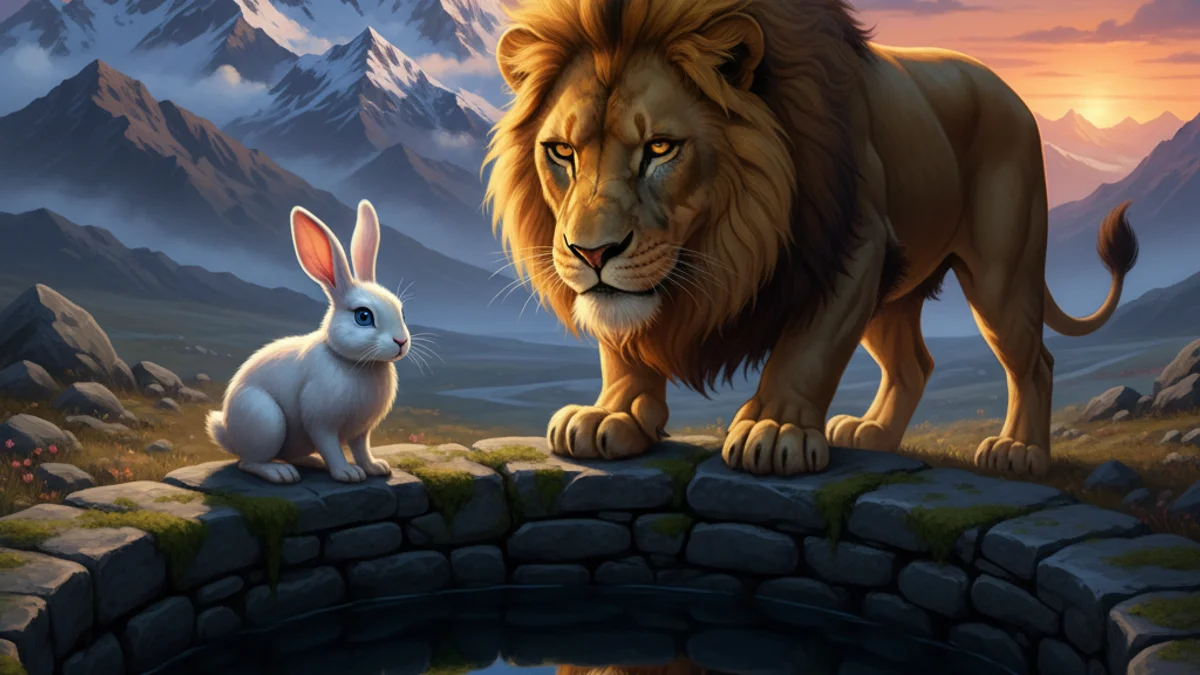
High in the rugged mountains of Tibet, a fierce lion terrorized the animal kingdom, demanding one creature be sacrificed for his meal each day. When the lot fell to a small rabbit, the tiny creature did not panic. He arrived late for the lion's meal, appearing breathless and terrified. The lion roared in anger at the delay, but the rabbit bowed low and whispered, 'O King, I was coming earlier, but I was stopped by another lion even larger and more ferocious than you! He claims to be the true ruler of these mountains.' Infuriated by the challenge to his ego, the lion demanded to be shown this rival. The rabbit led the lion to the edge of a deep, clear well. 'He is hiding in his fortress below,' the rabbit said. The lion peered into the water and saw a fierce lion staring back at him. When the lion roared, his reflection roared back. Thinking he was facing his enemy, the lion leaped into the well to attack and drowned in the deep water, leaving the clever rabbit to return home in peace.
The Moral
Intelligence and wit are far more powerful than physical strength and arrogance.
“A wise mind can conquer what the strongest claws cannot.”
Fun Fact
In Tibetan astrology and folk culture, the Rabbit is associated with longevity and peace, which reflects the character's peaceful yet effective solution to the lion's violence.
Frequently Asked Questions
What is the moral of The Clever Rabbit of Tibet?
The moral is that wisdom and presence of mind can overcome brute force and arrogance. It teaches that even the smallest individual can defeat a powerful bully using their intellect.
Is The Clever Rabbit of Tibet similar to other world fables?
Yes, this story shares a common ancestor with the Indian Panchatantra. It is a classic 'trickster' archetype found in various cultures to illustrate the power of the underdog.
What does the rabbit symbolize in Tibetan folklore?
In Tibetan culture, the rabbit often represents the common person or the underdog who must rely on quick thinking to survive against powerful external forces or oppressive rulers.
Why did the lion fall for the rabbit's trick?
The lion was blinded by his own ego and anger. His pride prevented him from realizing that he was looking at his own reflection rather than a real rival.
Does this story have historical significance in Tibet?
These tales were often told by nomadic herders and in monasteries to convey moral values and Buddhist principles, such as the dangers of pride and the value of skillful means.
What happened to the other animals in the story?
Once the rabbit defeated the lion, the daily sacrifices ceased. The rabbit was celebrated as a hero for freeing all the creatures of the mountain from the lion's tyranny.
Discussion (0)
Share your thoughts on this story
No comments yet. Be the first to share your thoughts!