Story Summary
Discover The Real Miracle, a classic Zen story about Bankei. Learn why true enlightenment is found in simple acts like eating and sleeping, not magic.
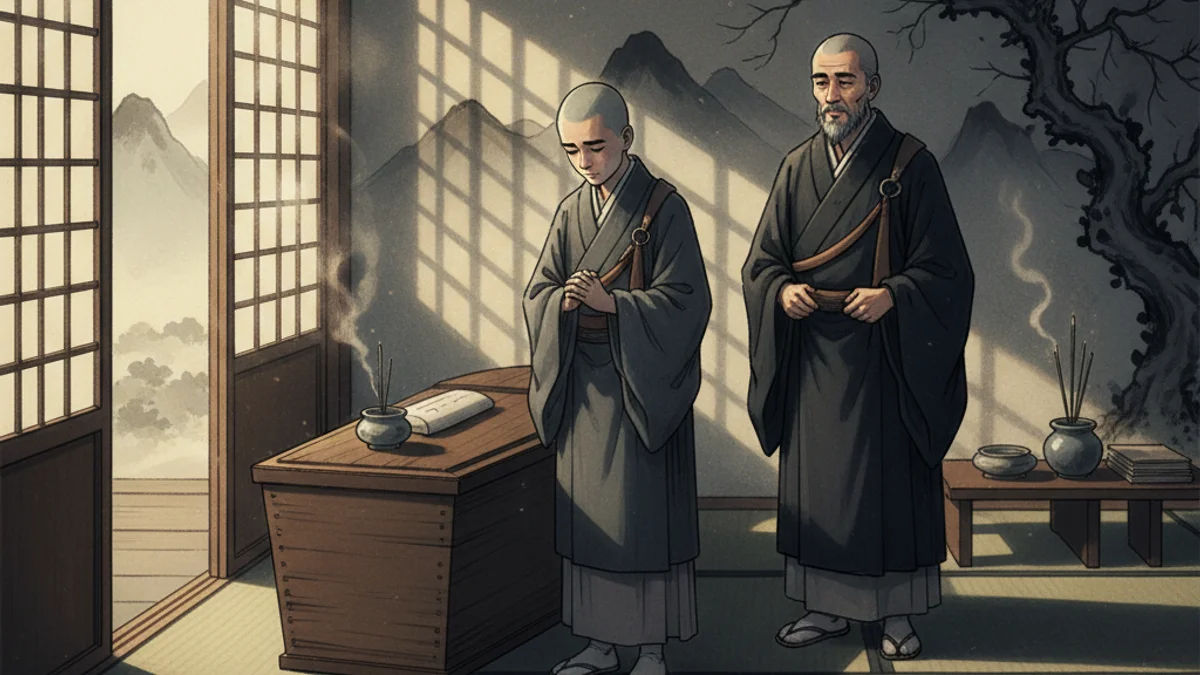
While Bankei was preaching at his temple, a priest from another sect arrived. This priest boasted of his teacher's supernatural abilities, claiming the master could hold a brush on one side of a river and write a holy name through the air onto a piece of paper held by an assistant on the far bank. 'What miracles can you perform?' the priest challenged Bankei. Bankei replied calmly, 'My miracle is that when I feel hungry, I eat, and when I feel thirsty, I drink.' The priest was confused, but Bankei explained that while others seek to perform feats that defy nature, the true Zen miracle is to be completely present and in harmony with the natural flow of life.
The Moral
True spiritual mastery is found in being fully present during ordinary, everyday actions rather than seeking supernatural powers.
“My miracle is that when I am hungry, I eat, and when I am tired, I sleep.”
Fun Fact
Bankei was famous for using plain language that common people could understand, often avoiding the complex Chinese terminology used by other Zen masters of his time.
Frequently Asked Questions
What is the moral of The Real Miracle?
The moral is that true enlightenment and spirituality are found in the simplicity of the present moment. Rather than seeking supernatural feats, one should strive for total mindfulness in daily activities like eating or resting.
Who was the Zen master Bankei?
Bankei Yōtaku was a famous 17th-century Japanese Zen master. He was known for his 'Unborn' Zen teaching, which emphasized that the Buddha-mind is innate and manifests through natural, simple living.
What does 'The Real Miracle' represent in Zen philosophy?
It represents the concept of 'Mindfulness.' In Zen, performing magic is considered a distraction or a 'siddhi' of the ego, while the real achievement is overcoming the restless mind to live authentically.
Why did the priest boast about his teacher's powers?
The priest belonged to a sect that valued 'hokus' or supernatural displays as proof of spiritual authority. He wanted to challenge Bankei and prove his own path was superior through flashy demonstrations.
What is the significance of eating and drinking in this story?
These actions signify basic human needs. By calling them 'miracles,' Bankei teaches that doing exactly what is required by the moment, without resistance or distraction, is the highest form of discipline.
How can we apply this Zen story to modern life?
It encourages us to find beauty in the mundane. Instead of chasing extraordinary experiences or status, we can find peace by focusing entirely on our current task, whether it is working, walking, or simply breathing.
Discussion (0)
Share your thoughts on this story
No comments yet. Be the first to share your thoughts!