Story Summary
Discover the classic West African trickster tale, How Anansi Got Eight Thin Legs, where a greedy spider's plan to feast at eight parties backfires hilariously.
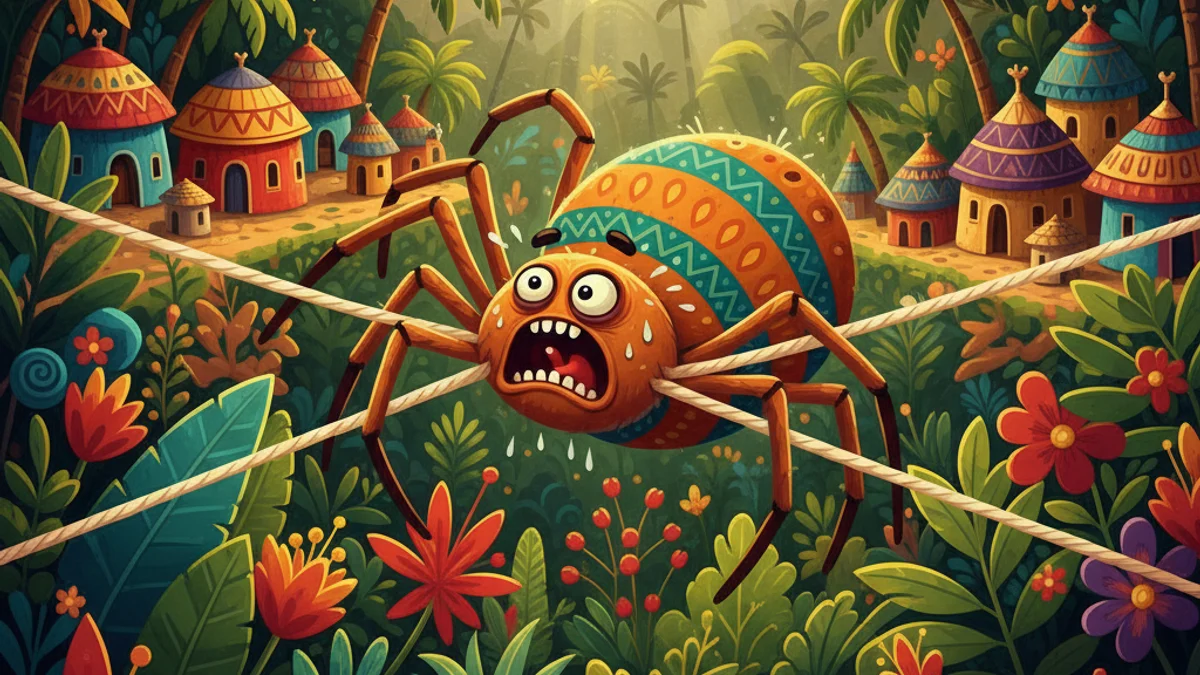
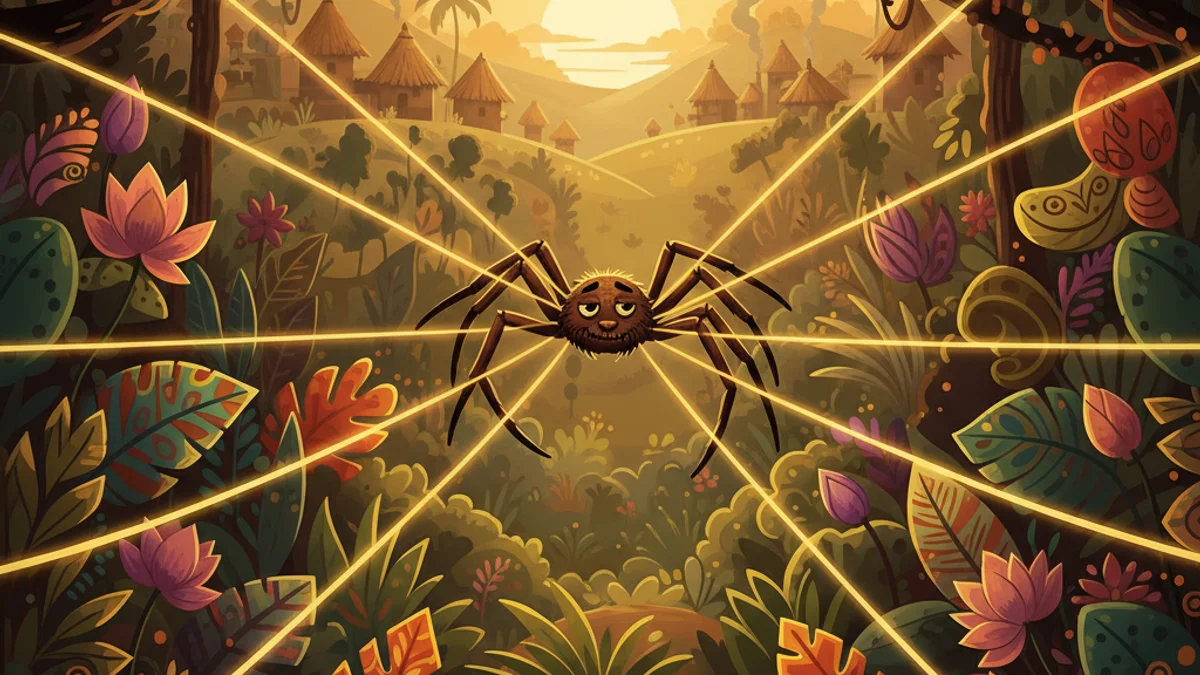
Long ago, Anansi the spider was a greedy fellow with eight thick, sturdy legs. One morning, he smelled delicious stews cooking in several different villages. Wanting to taste every dish but unable to be in eight places at once, Anansi came up with a clever plan. He spun eight long silk threads, tied one to each of his legs, and gave the other ends to his friends in eight different villages. 'Pull the thread when the feast is ready!' he instructed them. However, every village finished cooking at the exact same moment. Suddenly, Anansi felt a sharp tug from the north, then the south, then every direction at once. The threads tightened, pulling his legs harder and harder as each group of friends tried to lead him to their table. By the time the tugging stopped and the threads snapped, Anansi’s once-thick legs had been stretched into the long, spindly limbs we see on spiders today.
The Moral
Greed often leads to unintended consequences, and trying to have everything at once can leave you with nothing but trouble.
“A greedy man's hunger is a map that leads to many directions but arrives at none.”
Fun Fact
Anansi is one of the most important characters in West African and Caribbean folklore, often credited with being the 'Spirit of All Knowledge.'
Frequently Asked Questions
What is the moral of How Anansi Got Eight Thin Legs?
The story teaches that greed and trying to take more than your share can result in physical or social harm. It emphasizes the importance of focus and being content rather than being overly opportunistic.
Why did Anansi tie webs to his legs?
Anansi wanted to eat at eight different feasts happening at the same time. He tied the threads so his friends could signal him when the food was ready, allowing him to attempt to visit every village.
Who is Anansi in African folklore?
Anansi is a famous trickster character from West African Akan mythology, often depicted as a spider. He is known for his wit, cunning, and sometimes his foolishness or greed.
What happened to Anansi's legs at the end of the story?
Because all the villagers pulled his threads at the same time from different directions, Anansi's legs were stretched out. This transformed his thick legs into the long, thin legs that spiders have today.
Is Anansi a hero or a villain?
Anansi is a complex trickster figure who is neither purely a hero nor a villain. While he often acts out of self-interest, his stories are used to teach valuable life lessons and cultural values.
Where did the Anansi stories originate?
Anansi stories originated with the Akan people of Ghana. During the Atlantic slave trade, these tales spread to the Caribbean and the Americas, becoming a symbol of resistance and survival.