Story Summary
Explore the Kebra Nagast, Ethiopia’s sacred epic detailing Queen Makeda’s meeting with King Solomon and the divine birth of the Solomonic imperial dynasty.
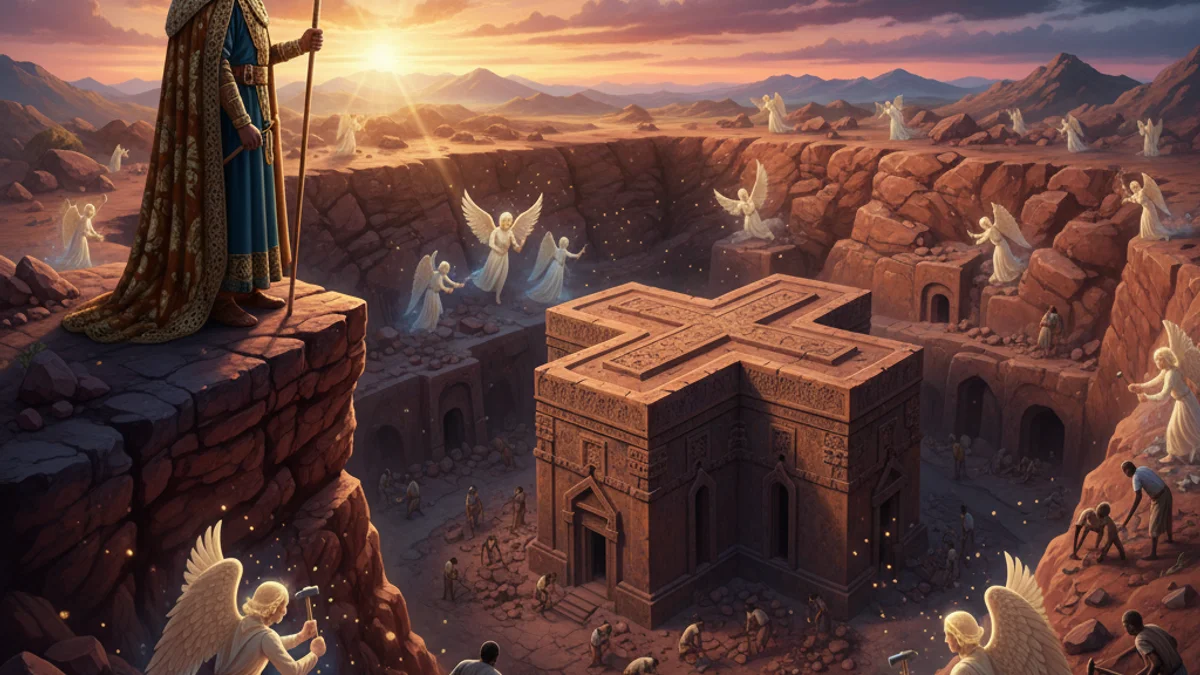
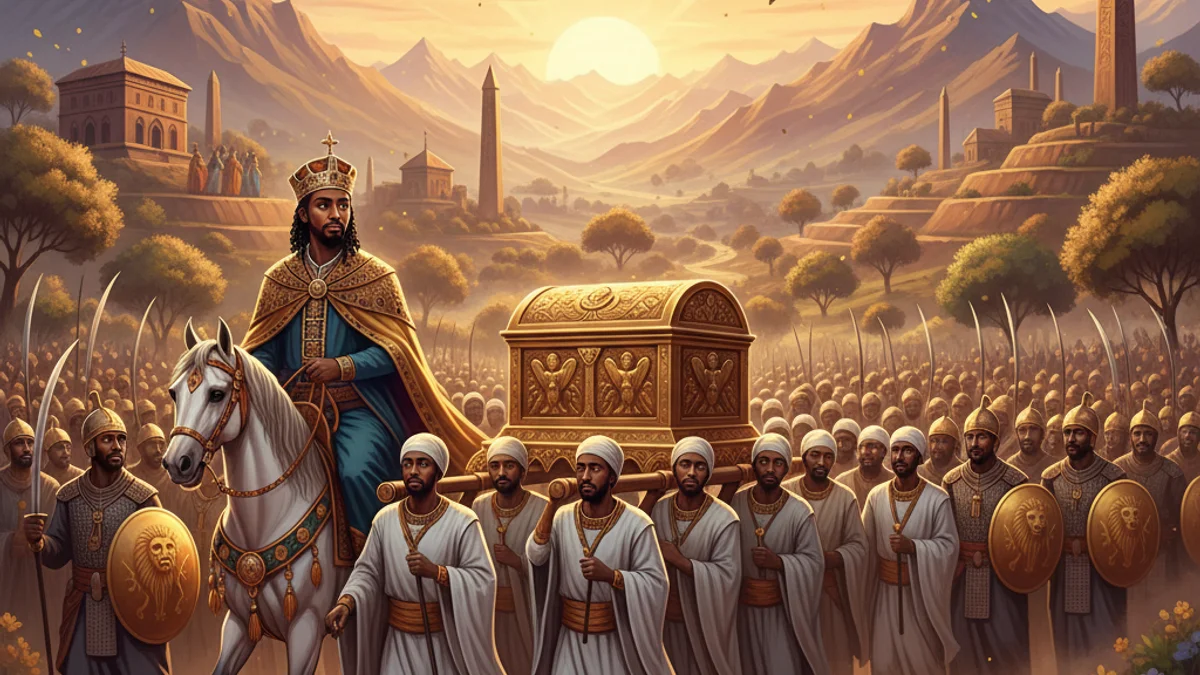
Queen Makeda, the wise ruler of Ethiopia, heard of King Solomon’s legendary intellect and traveled to Jerusalem to test him with hard questions. Solomon was enchanted by her brilliance and beauty. Before she departed, Solomon invited her to a great feast of salty delicacies. He made her promise not to take anything from his house, and she agreed, provided he did not touch her. In the night, parched by the salt, Makeda drank a bowl of water. Solomon appeared, declaring she had taken his most precious possession—water—and thus his vow was void. Makeda returned to Ethiopia and bore a son, Menelik I. Years later, Menelik visited his father in Jerusalem. Upon his return, the Ark of the Covenant was miraculously transported to Ethiopia by his companions. Solomon realized the Ark had chosen Ethiopia as its new home, establishing the Solomonic dynasty and cementing Ethiopia as the guardian of the divine presence.
The Moral
True authority is derived from the pursuit of wisdom and divine favor rather than mere earthly power.
“Wisdom is better than gold and silver, and understanding is better than precious stones.”
Fun Fact
The Kebra Nagast is so central to Ethiopian identity that it was used to justify the legitimacy of the Ethiopian monarchy until the end of the empire in 1974.
Frequently Asked Questions
What is the moral of The Kebra Nagast?
The story emphasizes that divine favor follows those who seek wisdom and remain faithful. It teaches that legitimate power is a gift from God, earned through spiritual pursuit and noble lineage.
What is the significance of the Ark of the Covenant in this story?
The Ark represents the physical presence of God’s covenant and divine approval. Its relocation from Jerusalem to Ethiopia signifies the transfer of spiritual authority to the Ethiopian people.
Who was Menelik I?
Menelik I was the legendary first Emperor of Ethiopia and the son of King Solomon and Queen Makeda. He is credited with founding the Solomonic dynasty that ruled Ethiopia for centuries.
Is the Kebra Nagast considered a historical document?
While it contains historical elements, it is primarily a national epic and sacred text. It serves to define the cultural identity and religious heritage of the Ethiopian Orthodox Church.
How did King Solomon trick the Queen of Sheba?
Solomon fed Makeda a salty meal and made her vow not to take anything from his house. When she drank water to quench her thirst at night, he claimed she broke her vow, leading to their union.
What does the title 'Kebra Nagast' mean?
The title translates to 'The Glory of the Kings.' It refers to the lineage of the Ethiopian monarchs who claimed descent from the biblical King Solomon and the Queen of Sheba.
Discussion (0)
Share your thoughts on this story
No comments yet. Be the first to share your thoughts!