Story Summary
Discover the Jain tale of The Boy and the Snake, where young Mahavira demonstrates profound non-violence and courage by calmly handling a venomous serpent.
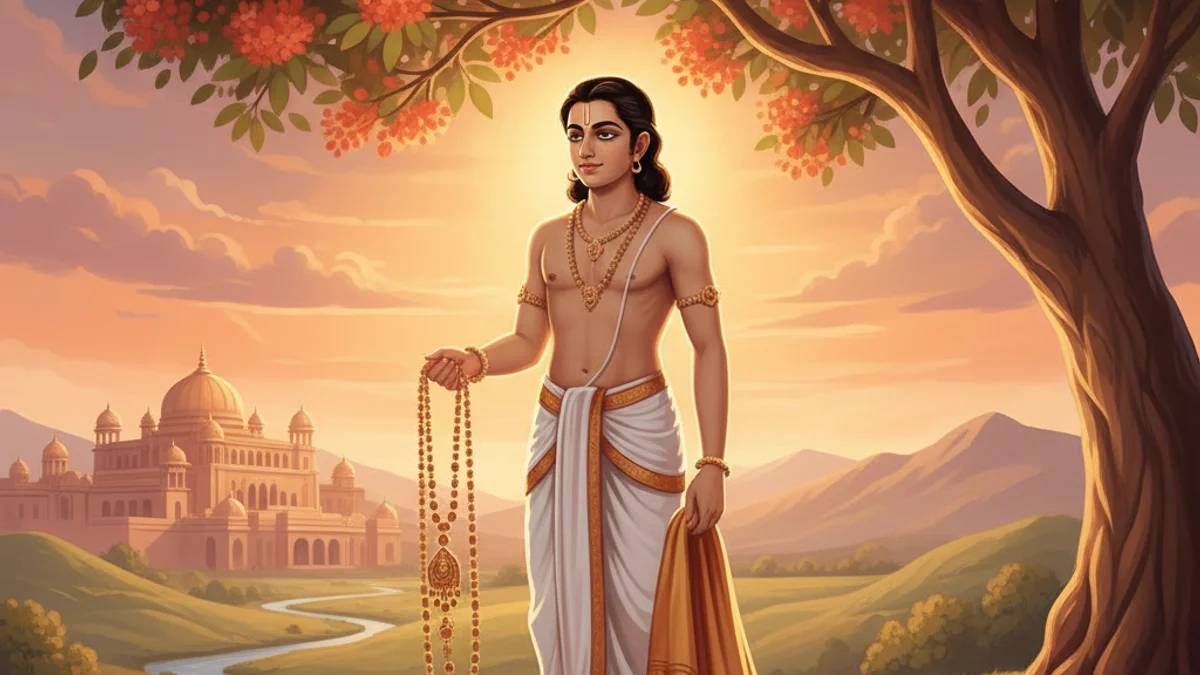
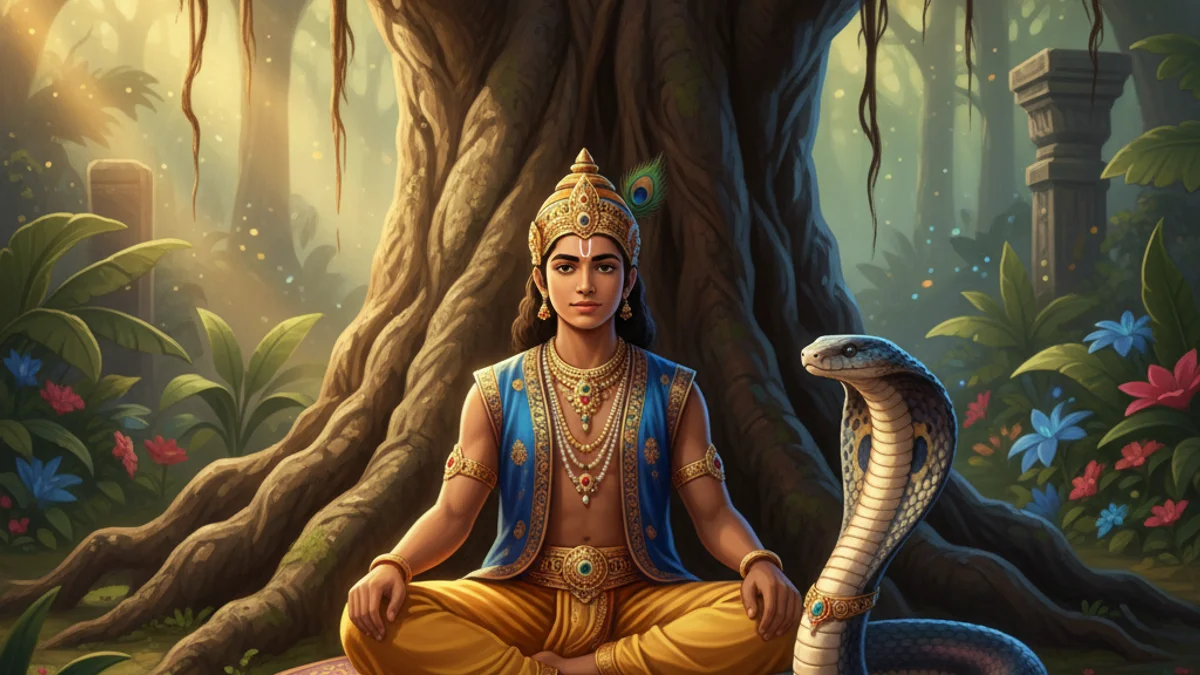
Prince Vardhamana, who would later become Lord Mahavira, was playing with his friends in a lush garden when a massive, venomous snake suddenly slithered into their midst. The other children shrieked in terror and scrambled up trees or fled the scene entirely. However, young Vardhamana remained perfectly composed. He felt no fear and held no malice toward the creature. Recognizing the snake as a living soul worthy of respect, he stepped forward, gently picked up the serpent, and moved it to a safe place away from the children. The snake, sensing his aura of absolute peace and non-violence, did not strike. This moment of supreme courage and compassion became a defining example of the Jain principle of Ahimsa.
The Moral
True courage is found in non-violence and the realization that all living beings deserve compassion.
“Where there is perfect non-violence, fear cannot exist.”
Fun Fact
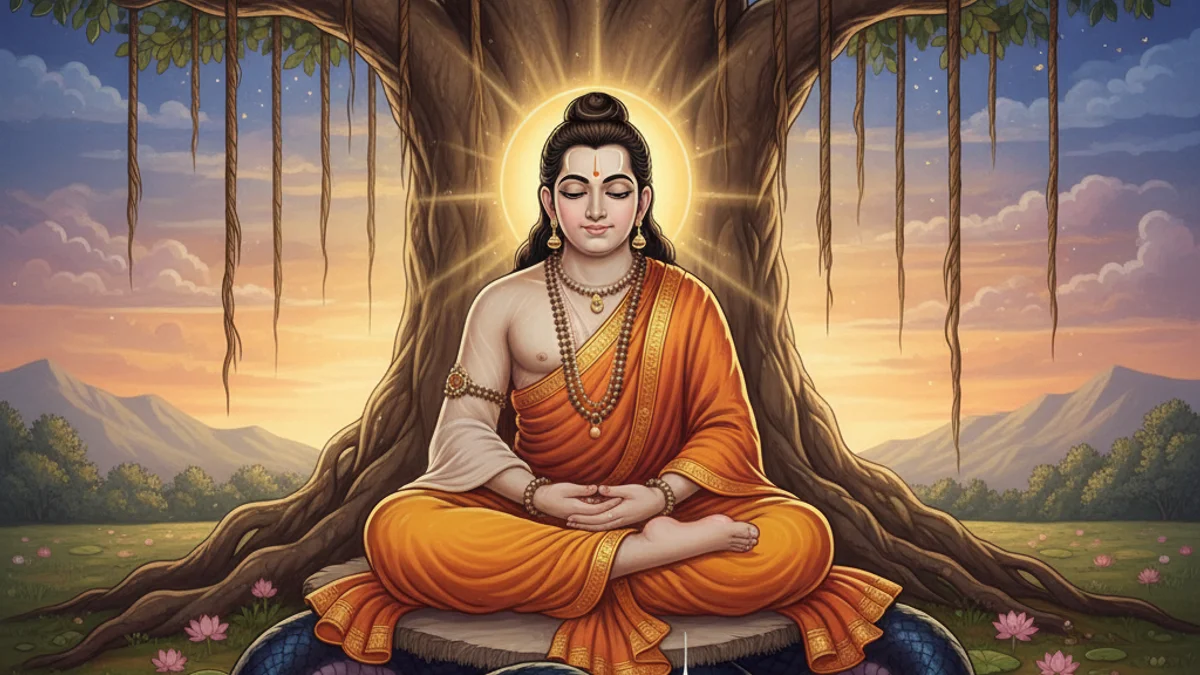
This story is one of the key reasons Mahavira is often depicted in art with a snake or as a courageous youth who mastered his environment through peace.
Frequently Asked Questions
What is the moral of The Boy and the Snake?
The moral is that true strength lies in non-violence (Ahimsa) and treating all living creatures with compassion. It teaches that fear disappears when we view others with love instead of hostility.
Who is the boy in this Jain story?
The boy is Prince Vardhamana, who later became Lord Mahavira, the 24th Tirthankara of Jainism. His childhood stories often emphasize his extraordinary courage and spiritual wisdom.
What does the snake symbolize in the story?
The snake represents a perceived threat or fear that tests a person's character. In this context, it also symbolizes a soul that reacts to the energy and intentions of those around it.
Why didn't the snake bite the boy?
According to the legend, the snake sensed Vardhamana's total lack of fear and aggression. Because the boy possessed a heart full of non-violence, the snake remained calm and peaceful in his presence.
What is the significance of the name Mahavira?
The name 'Mahavira' means 'Great Hero.' This title was given to him because of his inner strength and his ability to conquer fear and worldly desires through non-violence.
How does this story relate to Jainism?
It illustrates 'Ahimsa,' the core Jain tenet of non-injury to any living being. It shows that practicing non-violence is not an act of cowardice, but the highest form of bravery.
Discussion (0)
Share your thoughts on this story
No comments yet. Be the first to share your thoughts!