Story Summary
Discover how the young hero Sétanta earned his legendary title in Cú Chulainn Gets His Name, a classic tale of courage and honor from the Irish Ulster Cycle.
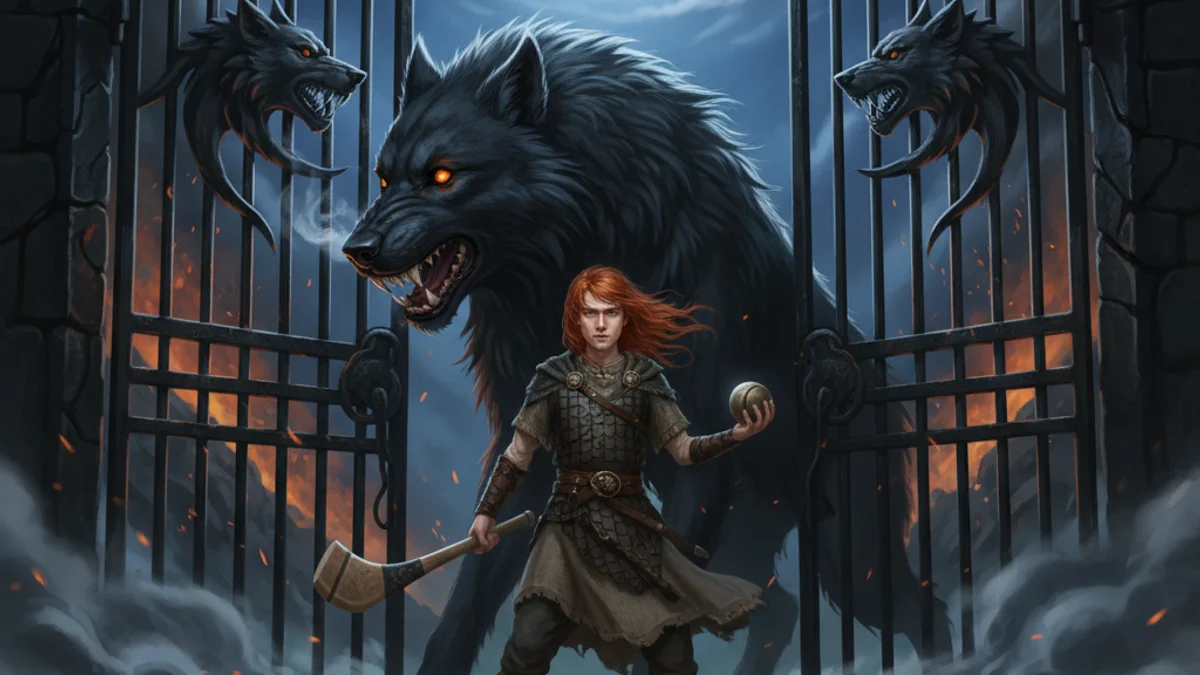
Young Sétanta was a boy of extraordinary strength and skill. One day, King Conchobar invited him to a feast at the fortress of Culann the Smith. Sétanta, busy with a game of hurling, promised to follow later. When he finally arrived, he was met by Culann’s massive guard dog—a beast so fierce it took three men to restrain it. Unaware that a guest was still expected, Culann had unleashed the hound for the night. As the beast lunged at the boy's throat, Sétanta defended himself with his hurley and a bronze sliotar, eventually slaying the creature in a desperate struggle. Inside, the guests heard the commotion and rushed out. While they were relieved Sétanta was alive, Culann wept for his loyal protector. Moved by the smith's grief, the boy made a solemn vow: 'I will rear you a pup from the same bloodline, and until it is grown, I myself shall be your hound and guard your gates.' The druid Cathbad declared that from that day forward, he would be known as Cú Chulainn—the Hound of Culann.
The Moral
True heroism is found in taking responsibility for one's actions and offering service to those we have unintentionally wronged.
“If there is a hound in Ireland to guard you, I shall be that hound.”
Fun Fact
Cú Chulainn is often compared to the Greek hero Achilles because both were demigods who chose a short, glorious life over a long, forgotten one.
Frequently Asked Questions
What is the moral of Cú Chulainn Gets His Name?
The moral is about accountability and the transformation of a mistake into a noble duty. It teaches that a true hero fixes what they break and honors their debts through selfless service.
What does the name Cú Chulainn actually mean?
The name Cú Chulainn translates from Old Irish to 'the Hound of Culann.' It signifies his new role as the protector of the blacksmith's property after he accidentally killed the previous guard dog.
Why did Sétanta kill the hound?
Sétanta killed the hound in self-defense. He arrived late to a feast at Culann's house, and the smith, thinking all guests were already inside, had released his monstrous guard dog to protect the grounds.
What weapons did Sétanta use against the dog?
As a young boy, Sétanta used his sports equipment: a hurley (wooden stick) and a sliotar (hard ball). In some versions, he kills the dog by driving the ball into its throat with incredible force.
Who was Culann in Irish mythology?
Culann was a legendary blacksmith of the Ulster Cycle. In Celtic tradition, smiths were often viewed as magical figures because of their ability to transform raw metal into powerful weapons.
Is Cú Chulainn a god or a human?
Cú Chulainn is a demigod. He is the son of the mortal woman Deichtine and the Celtic sun god Lugh, which explains his superhuman strength and his famous 'warp-spasm' battle rage.