The Witch's Steed
Story Summary
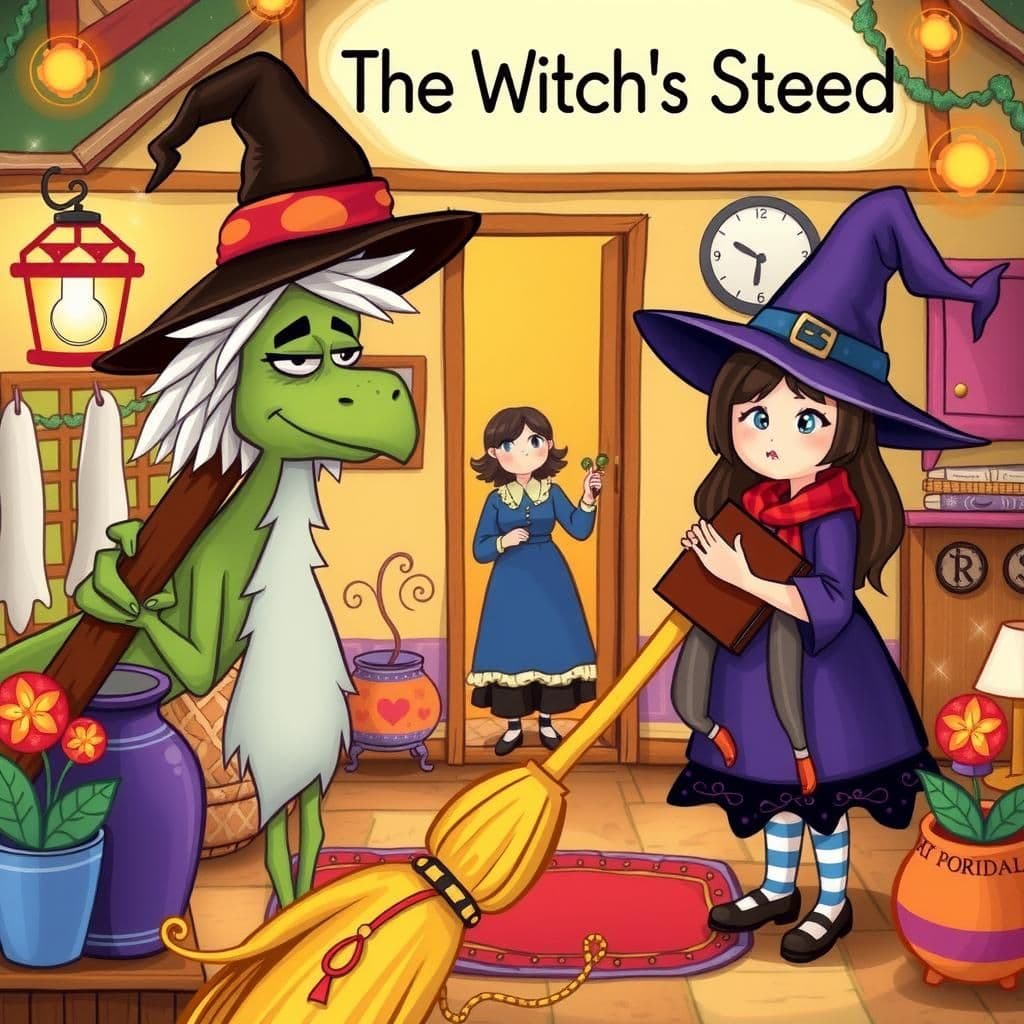
In "The Witch's Steed," an entertaining moral story, a broomstick serving a witch feels degraded by its role and expresses dissatisfaction. The witch humorously offers to elevate its status by introducing it to a housewife, prompting the broomstick to question the intellectuality of her hands, only for the witch to clarify that she was referring to the intellect of the housewife's husband. This short moral tale highlights the lessons learned from stories about self-worth and perspective.
Click to reveal the moral of the story
The story highlights the irony of misplaced pride, showing that true intellect may not always be where one expects it to be.
Historical Context
This story reflects the rich tradition of European folklore surrounding witches and their magical tools, particularly broomsticks, which are often depicted as symbols of domesticity and the supernatural. The narrative plays on the themes of gender roles and societal perceptions of intellect, echoing tales from sources like the Brothers Grimm and other fairy tales that explore the dynamics between witches, women, and domestic life, often with a satirical or humorous twist. Such stories frequently critique or subvert traditional gender expectations, revealing the underlying tensions between labor, intellect, and social status.
Our Editors Opinion
This story highlights the importance of valuing all forms of work, regardless of societal perceptions, and the often-overlooked intelligence behind everyday tasks. In modern life, a scenario could involve a stay-at-home parent who manages household responsibilities while their partner works outside, emphasizing that their work is equally critical and often requires significant problem-solving and emotional intelligence, challenging the notion that certain roles are more valuable than others.
You May Also Like
The Prophet
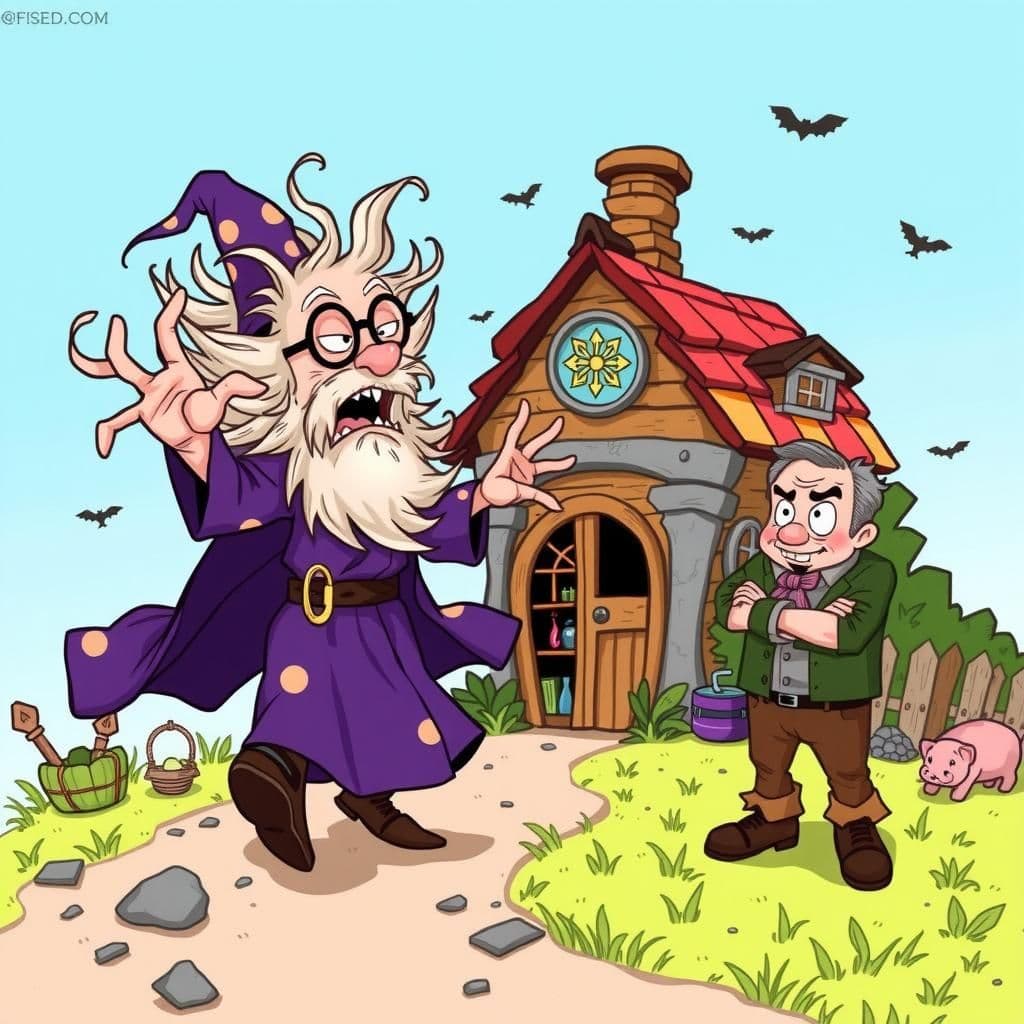
In "The Prophet," a wizard known for telling fortunes faces a moment of irony when he learns his house is being robbed, despite his ability to foresee the futures of others. As he rushes to save his belongings, a mocking neighbor questions why he couldn't predict his own misfortune, highlighting a powerful lesson about the limitations of foresight. This simple short story with moral serves as a reminder of the importance of personal awareness and growth, making it one of the best moral stories for students.
The Bull the Lioness and the Wild Boar Hunter
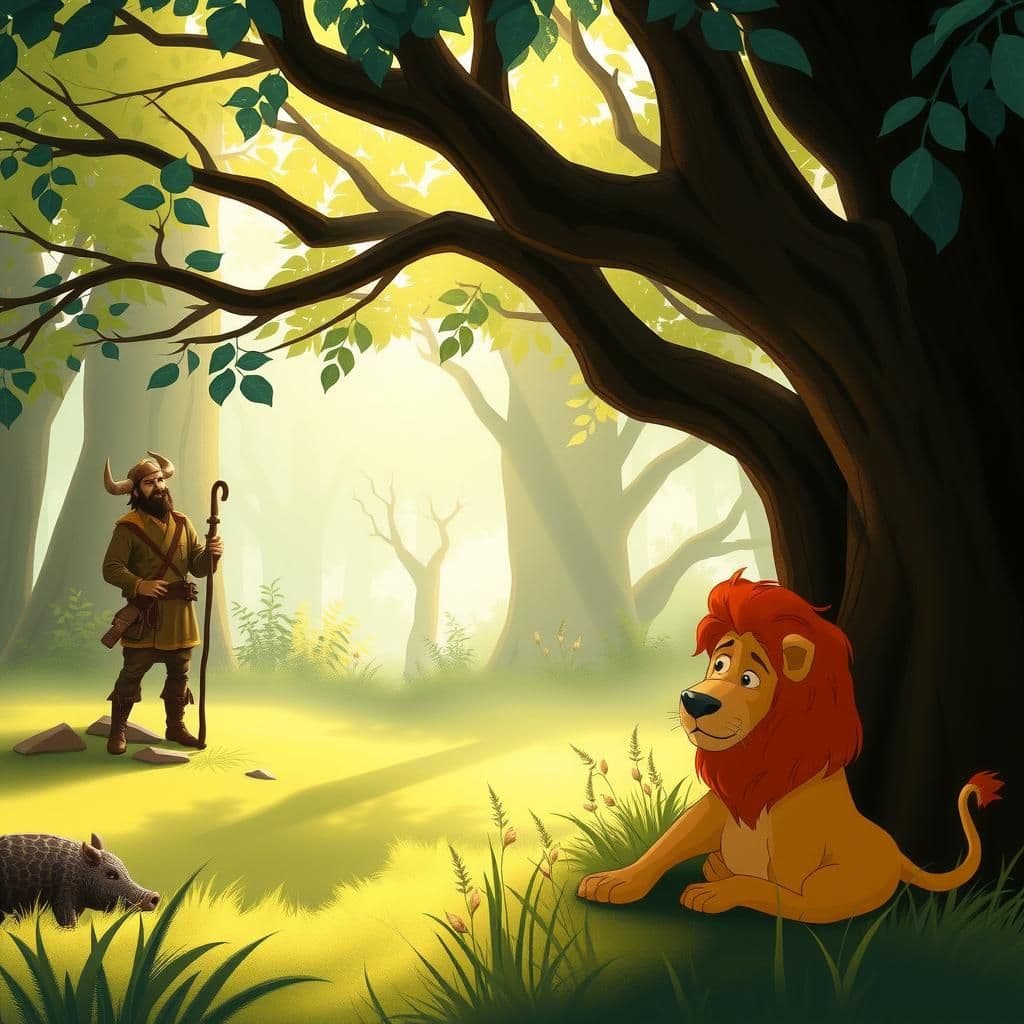
In this impactful moral story, a bull accidentally kills a lioness's cub, prompting her to mourn deeply. A wild boar hunter, observing her sorrow, points out that many men also grieve for their lost children due to her predatory nature. This short moral tale serves as a reminder of the cycle of loss and the consequences of one's actions, making it a poignant lesson for class 7 students.

Wasted Sweets
In this thought-provoking tale, a candidate canvassing his district kisses a baby in a carriage, believing the moment to be heartwarming. However, he is confronted with the irony that the baby belongs to an orphan asylum, and the nurse caring for it is an inmate of an institution for the illiterate, deaf, and dumb. This story serves as a reminder of the deeper moral lessons often found in well-known moral stories, encouraging personal growth through storytelling with morals.
Other names for this story
Broomstick Blues, Enchanted Ride, Witch's Broom, The Broom's Complaint, Magical Steed, Sorceress' Ride, Broomstick Adventures, The Witch's Ride
Did You Know?
This story humorously highlights the irony of perceived intellect, suggesting that societal roles often dictate our understanding of intelligence, as the broomstick's disdain for its work reflects a broader commentary on the value placed on different types of labor, especially in domestic settings. The witch’s response cleverly critiques the notion that intellectual engagement is solely found in traditionally esteemed roles, pointing to the complexities of gender and societal expectations.
Subscribe to Daily Stories
Get a new moral story in your inbox every day.