The Honest Cadi

Story Summary
In "The Honest Cadi," a robber who steals a merchant's gold faces the judgment of a Cadi. Cleverly, the Cadi spares the robber's life by accepting half of the stolen gold as a bribe, resulting in a unique punishment where the robber loses only half of his head, leaving him able to converse. This engaging tale serves as a meaningful story with moral lessons for young readers, emphasizing the complexities of justice and temptation, making it an ideal choice for short bedtime stories with moral values.
Click to reveal the moral of the story
The story illustrates the corrupting influence of power and temptation, revealing how individuals may exploit their positions for personal gain.
Historical Context
This story reflects themes from Middle Eastern folklore, particularly the tradition of the "frame story" seen in collections like "One Thousand and One Nights." It showcases the interplay of justice and corruption, a common motif in tales of clever rogues and moral dilemmas, which often highlight the fallibility of authority figures and the absurdities of human nature. The narrative's satirical tone critiques the legal system while simultaneously providing commentary on fate and divine influence in human affairs.
Our Editors Opinion
This story illustrates the moral that individuals often evade personal responsibility by attributing their actions to external forces, such as fate or divine will, while those in power may exploit their positions for personal gain. In modern life, this can be seen in scenarios like corporate executives justifying unethical practices by claiming market pressures, while regulators or officials, tempted by bribes, may compromise their integrity, perpetuating a cycle of corruption.
You May Also Like
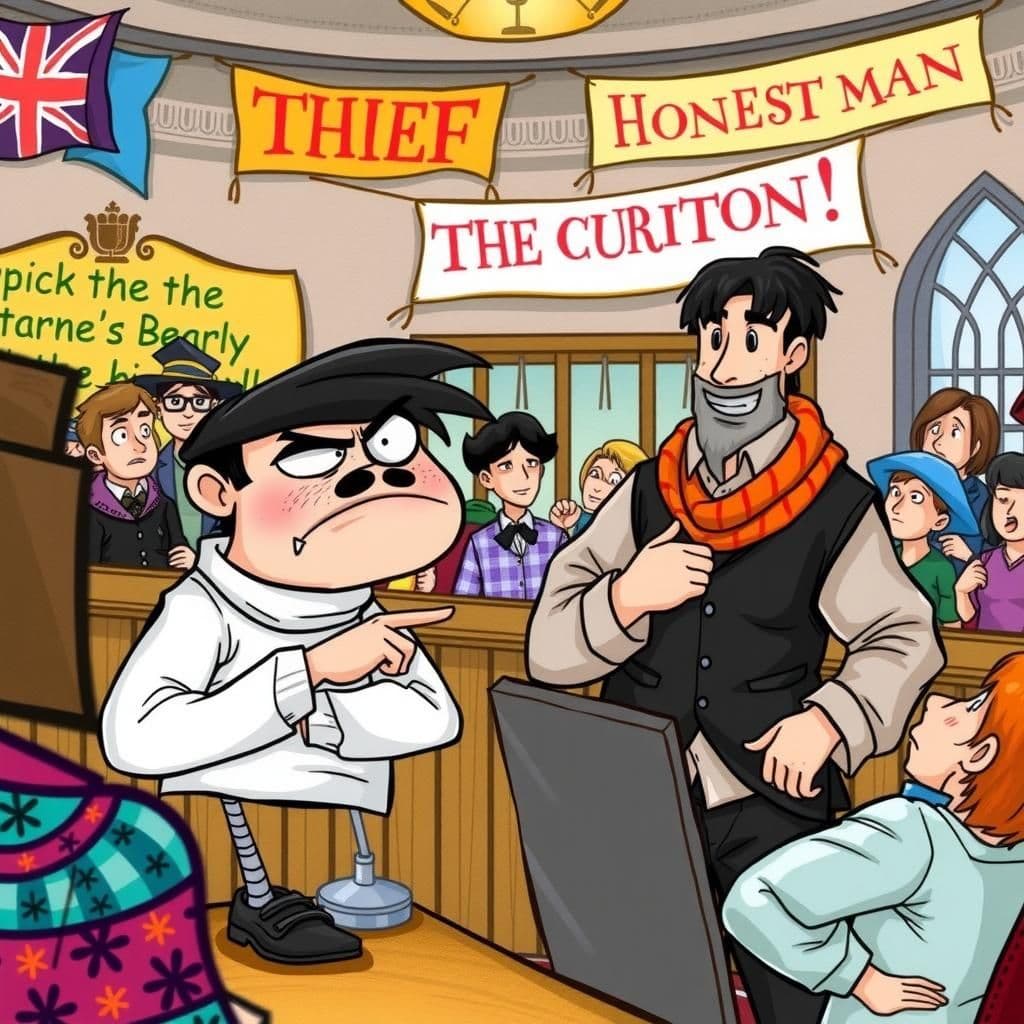
The Thief and the Honest Man
In the wisdom-packed moral story "The Thief and the Honest Man," a thief sues his accomplices for his share of stolen goods from an Honest Man, who cleverly evades the trial by claiming he is merely an agent for other honest individuals. When served with a subpoena, the Honest Man amusingly distracts himself by pretending to pick his own pockets, illustrating the lessons learned from stories about accountability and cleverness in the face of adversity. This short story with a moral leaves readers pondering the complexities of honesty and complicity in wrongdoing.
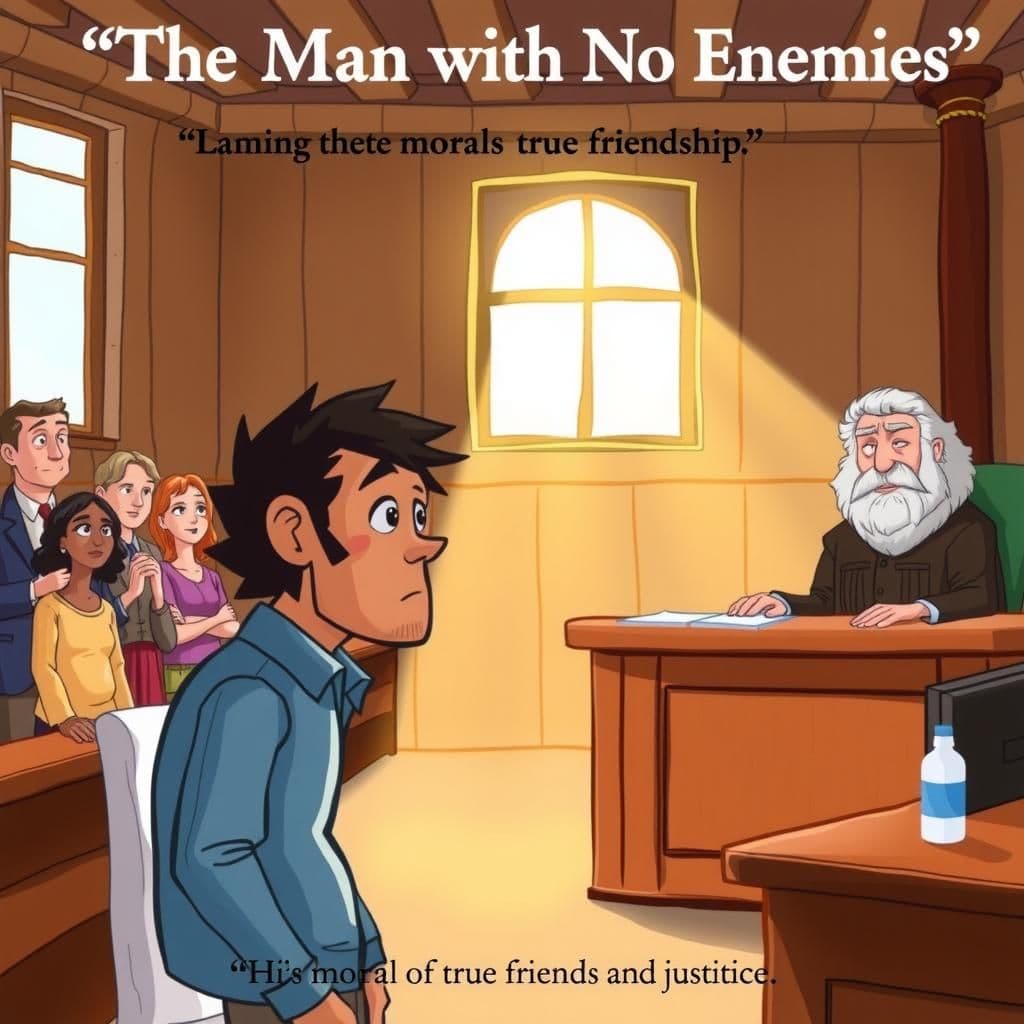
The Man with No Enemies
In "The Man with No Enemies," an inoffensive person is brutally assaulted by a stranger, leading to a trial where he claims to have no enemies. The defendant argues that this lack of enemies was the very reason for the attack, prompting the judge to dismiss the case with a humorous yet moral lesson: a person without enemies cannot truly have friends, and thus should not seek justice in court. This short story serves as a thought-provoking moral lesson for students about the complexities of relationships and the nature of conflict.

A Hasty Settlement
In "A Hasty Settlement," an attorney proposes to reopen a concluded estate case after realizing there may be remaining assets, prompting the judge to reconsider the initial valuation. This concise moral story highlights the importance of diligence and the potential for overlooked opportunities, reminding readers that lessons learned from stories can inspire a deeper understanding of justice and fairness in seemingly settled matters.
Other names for this story
Cadi's Clever Justice, The Tempted Judge, Gold and Justice, Acquitted by Bribery, The Robber's Gamble, Half a Head, The Honest Verdict, Justice and Greed
Did You Know?
This story cleverly highlights the themes of justice and corruption, illustrating how those in power can exploit their positions for personal gain, while also questioning the nature of predestination and free will in moral choices. The Cadi's humorous yet grim resolution underscores the absurdity of a system where integrity is compromised by temptation.
Subscribe to Daily Stories
Get a new moral story in your inbox every day.