The Grasshopper and the Owl
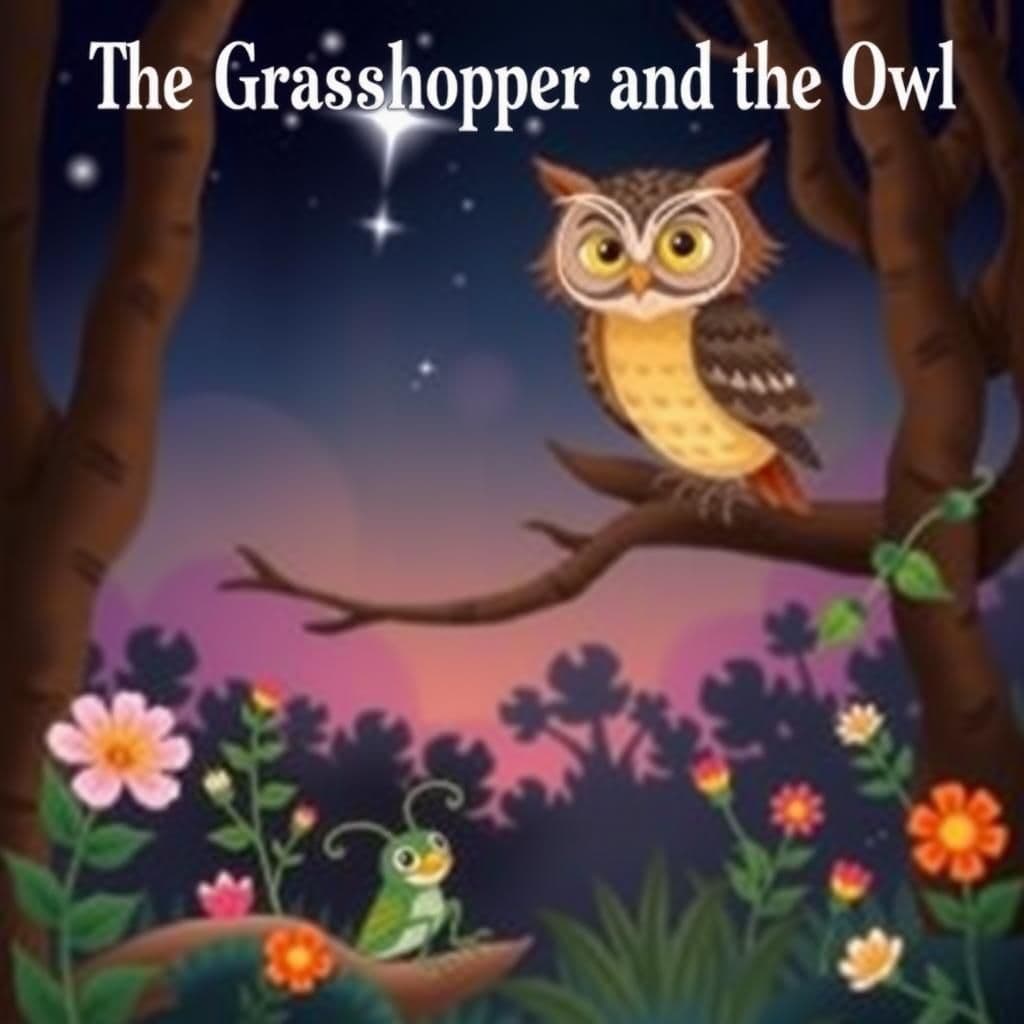
Story Summary
In "The Grasshopper and the Owl," a moral story for kids, an owl, disturbed by a grasshopper's incessant chirping, pleads with her to stop, but the grasshopper ignores her. Lured by the owl's flattery and a promise of nectar, the unsuspecting grasshopper eagerly approaches, only to be deceived and killed. This easy small story with moral teaches valuable lessons about the dangers of vanity and the consequences of ignoring wise counsel.
Click to reveal the moral of the story
Beware of flattery, as it can lead to your downfall.
Historical Context
This fable, likely derived from Aesop's collection of moral tales, reflects the ancient Greek tradition of using anthropomorphized animals to convey lessons about human behavior and consequences. In various retellings, including those by Phaedrus and later La Fontaine, the story highlights themes of hubris and the dangers of ignoring wise counsel, illustrating how pride can lead to one's downfall. The use of the Owl and Grasshopper symbolizes the conflict between wisdom and folly, a common motif in folklore across cultures.
Our Editors Opinion
This fable illustrates the dangers of overconfidence and the perils of ignoring warnings from those with more experience. In modern life, this can be seen in scenarios such as a young professional who dismisses the advice of a seasoned mentor about workplace decorum, only to find themselves ostracized for inappropriate behavior.
You May Also Like
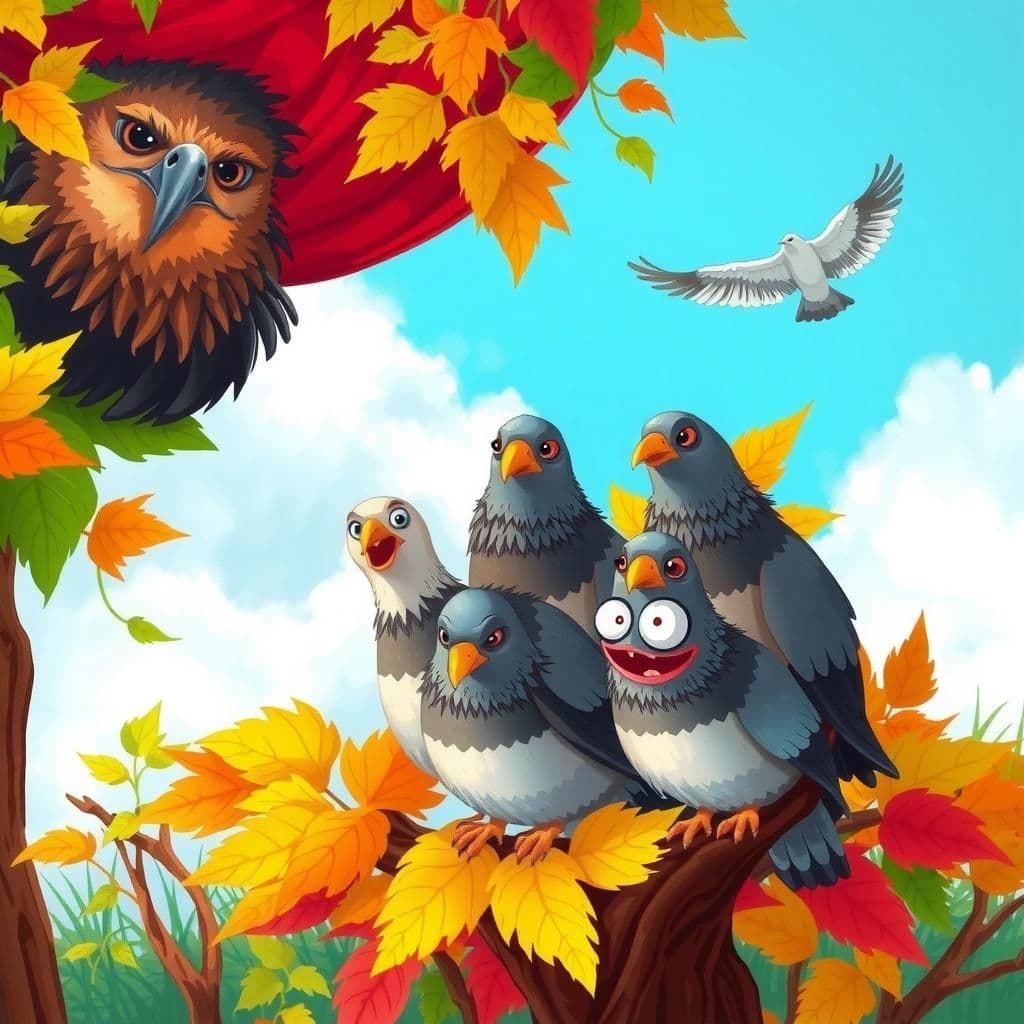
The Hawk the Kite and the Pigeons
In the best moral story "The Hawk the Kite and the Pigeons," terrified pigeons seek help from the Hawk to protect them from the Kite, only to discover that the Hawk poses an even greater threat, causing more destruction than the Kite ever did. This animal story with moral teaches children a valuable life lesson: be cautious of seeking remedies that may ultimately be worse than the original problem. Through this folklore and moral story, readers learn the importance of carefully considering the consequences of their choices.
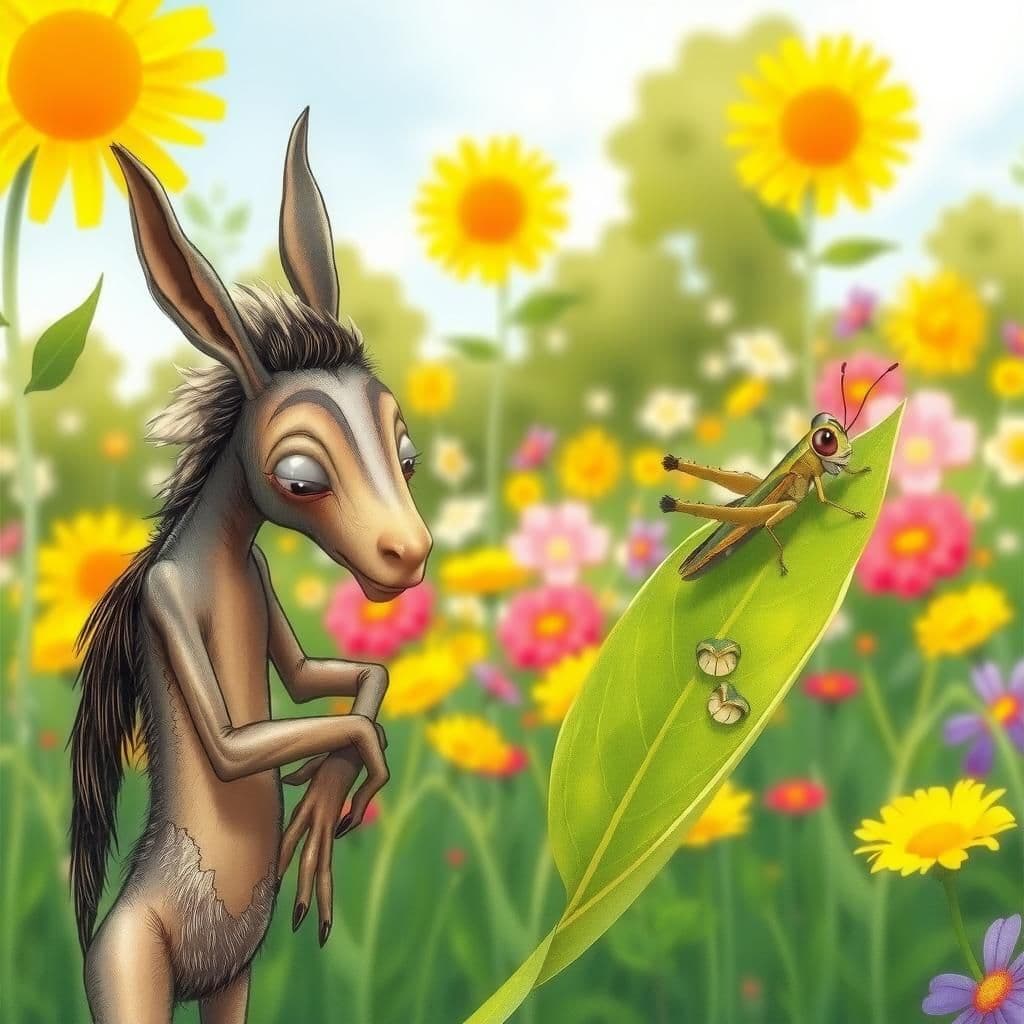
The Ass and the Grasshopper
In the well-known moral story "The Ass and the Grasshopper," an ass becomes enchanted by the beautiful singing of grasshoppers and, in his desire to emulate them, decides to live solely on dew, believing it to be the secret to their melody. This foolish choice leads to his tragic death from starvation, illustrating that attempting to imitate others without understanding their needs can have dire consequences. This simple moral story serves as a cautionary tale for students about the dangers of envy and blind imitation.
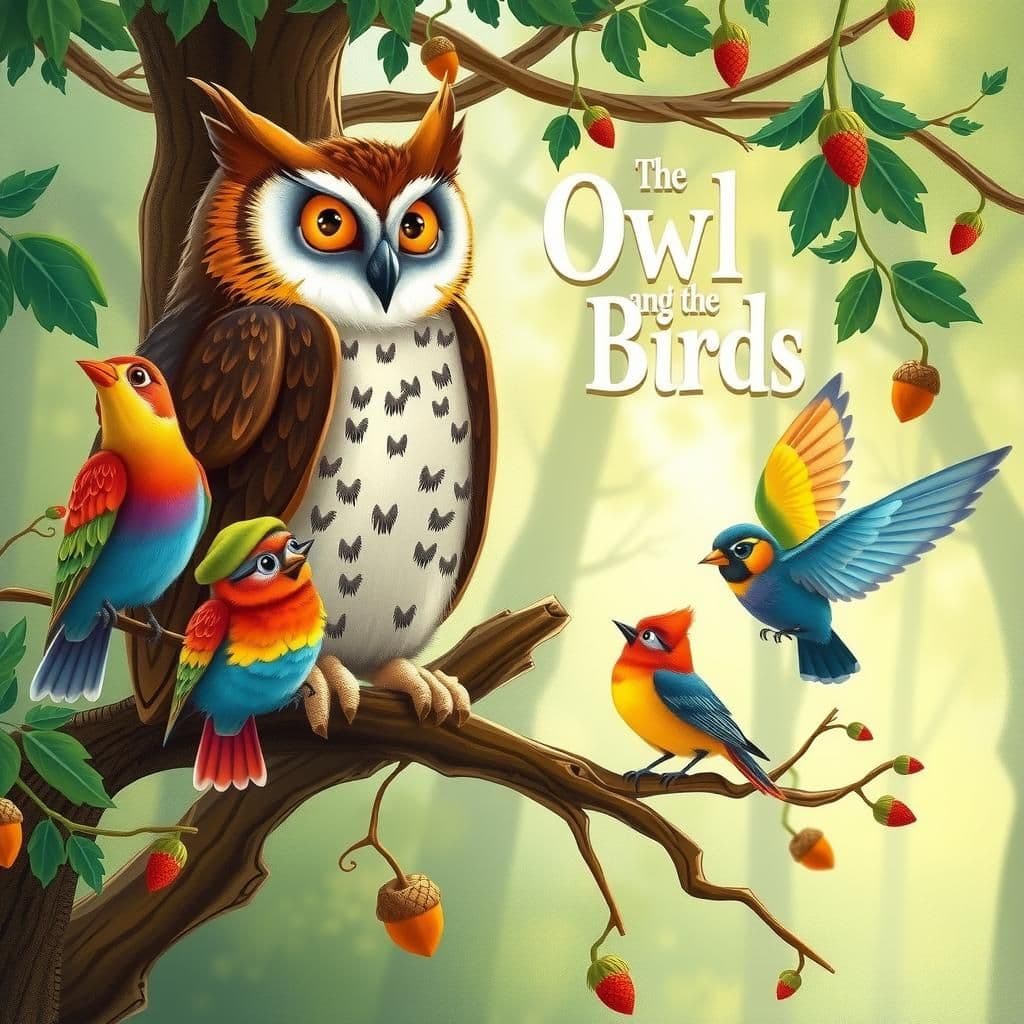
The Owl and the Birds
In "The Owl and the Birds," a wise owl shares her knowledge through moral-based storytelling, warning the birds to uproot sprouting acorns and flax seeds that would bring danger from mistletoe and hunters. Dismissing her counsel as madness, the birds later regret their disbelief when her predictions come true, realizing the owl's wisdom echoes the lessons found in classic moral stories. Now, they revere her in silence, reflecting on their past folly and the importance of heeding wise advice.
Other names for this story
The Noisy Grasshopper, The Owl's Revenge, Nighttime Chatter, The Grasshopper's Folly, The Silent Night, Nature's Duel, The Owl and the Chirper, Sweet Lure of Death
Did You Know?
This fable illustrates the theme of cunning versus brute force, showcasing how the Owl's cleverness ultimately triumphs over the Grasshopper's arrogance and disregard for others, emphasizing the dangers of vanity and the consequences of ignoring warnings.
Subscribe to Daily Stories
Get a new moral story in your inbox every day.
Explore More Stories
Story Details
- Age Group
- adultkidschildrenstory for class 2story for class 3story for class 4story for class 5story for class 6story for class 7story for class 8
- Theme
- Deceptionconsequences of pridethe struggle between different ways of life
- Characters
- OwlGrasshopperPallas (Athena)Apollo
- Setting
- foresthollow