Story Summary
Discover the ancient Egyptian myth Truth and Falsehood. Witness a son’s clever quest to restore his blinded father’s honor and expose the treachery of lies.
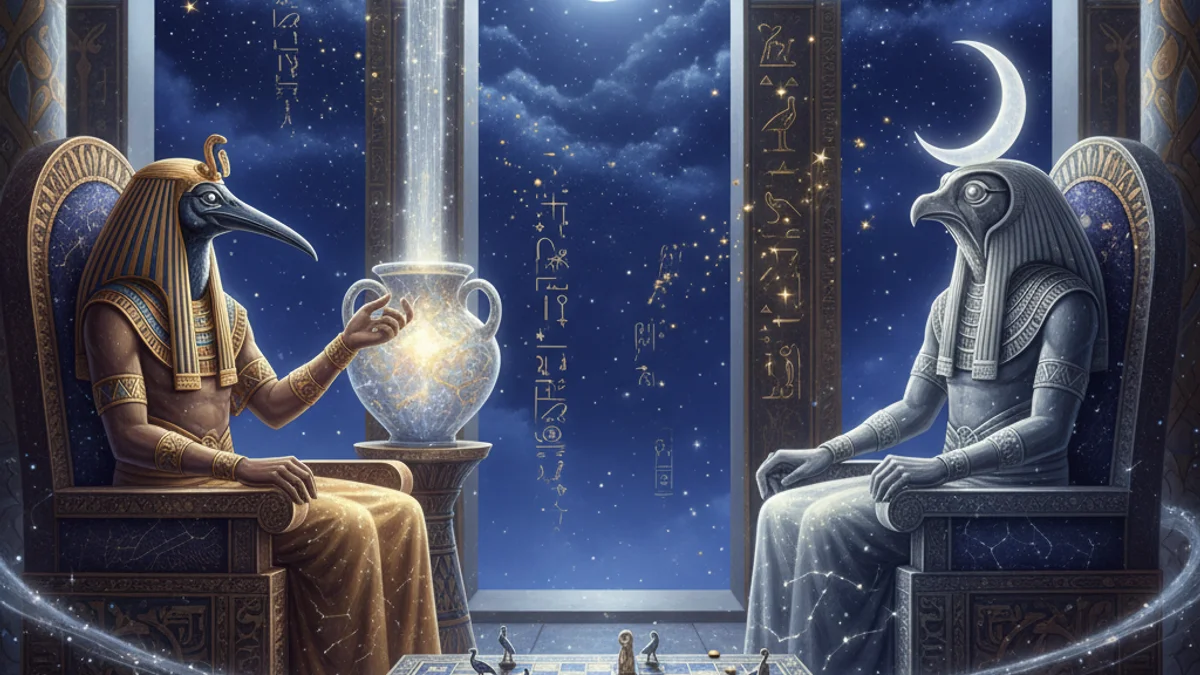
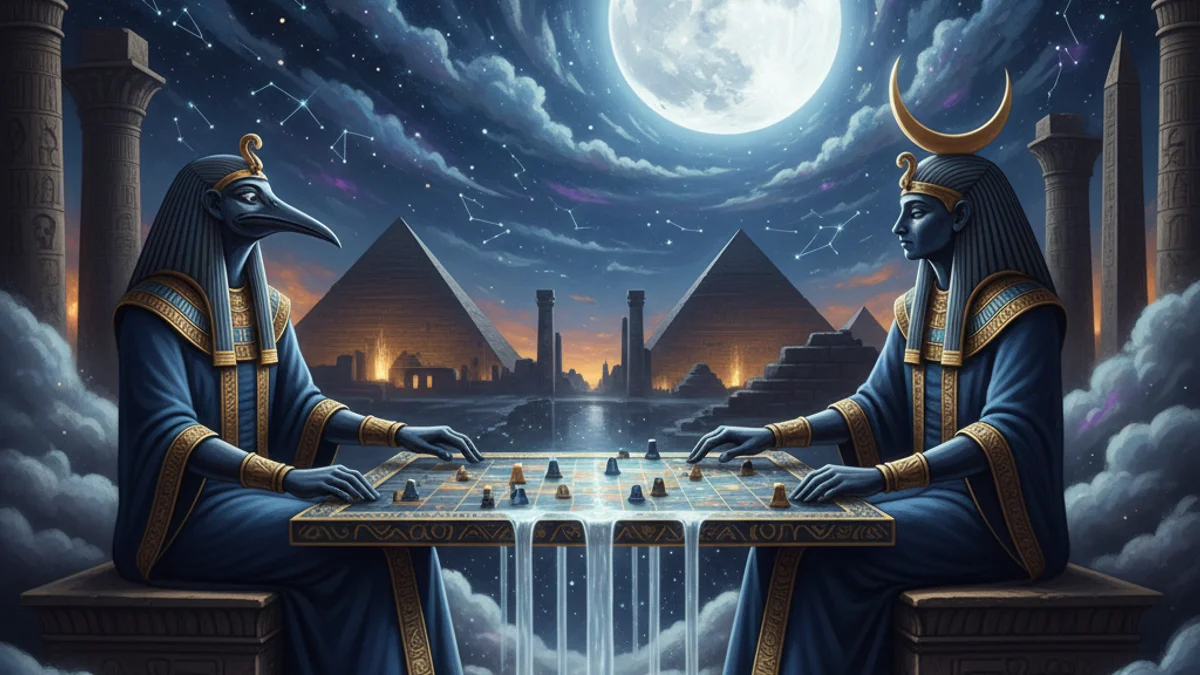
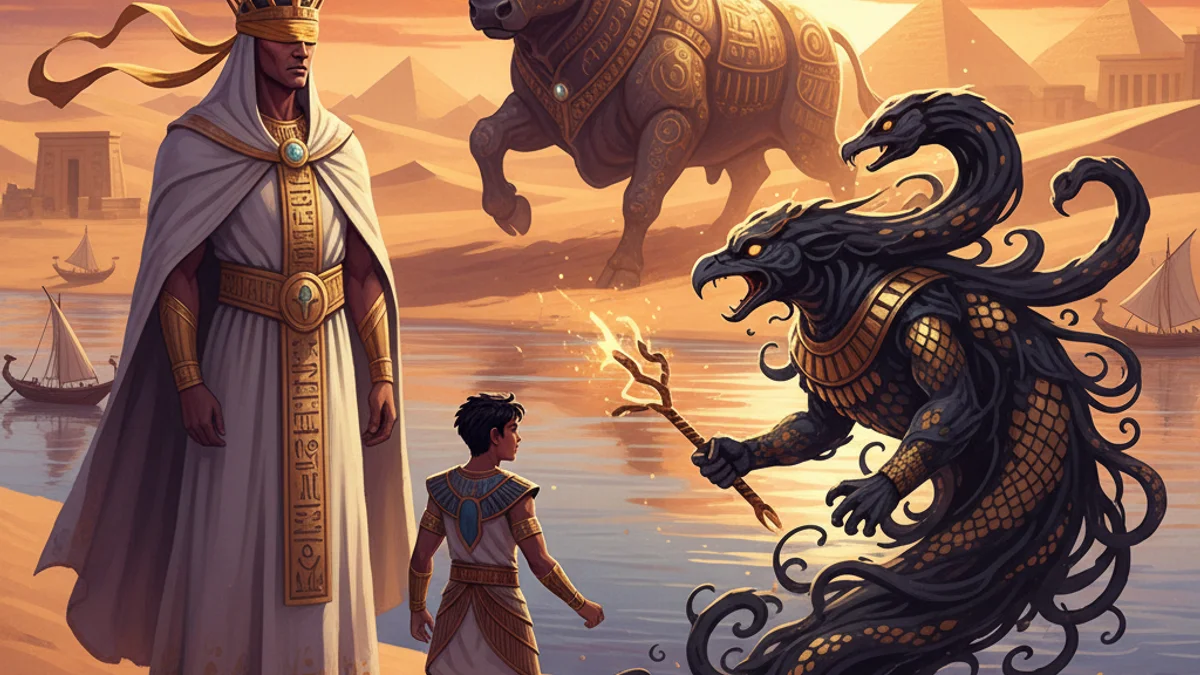
In the dawn of time, two brothers walked the earth: Truth and Falsehood. Falsehood, ever envious, conspired to destroy his brother. He claimed Truth had stolen a dagger of impossible proportions, its blade as large as a mountain. Despite the absurdity, the divine tribunal believed the lie and ordered Truth to be blinded and cast out. Years later, Truth’s son grew into a formidable man. Seeking to avenge his father, he took a magnificent ox to the city. When Falsehood’s servant attempted to buy it, the son claimed the ox was so large its horns touched the sky and its tail brushed the stars. Falsehood scoffed at the impossibility, to which the son replied that it was no more impossible than a dagger the size of a mountain. Exposed by his own logic, Falsehood was forced to admit his deceit. Truth’s honor was restored, proving that while lies may blind, the light of reality eventually returns.
The Moral
Deception may provide a temporary advantage, but it is ultimately fragile and will be dismantled by its own inconsistency.
“A lie may travel a thousand miles, but the truth will eventually find its feet.”
Fun Fact
This story is part of a literary genre known as 'Blinding of Truth,' which influenced various folk traditions across the Mediterranean for centuries.
Frequently Asked Questions
What is the moral of Truth and Falsehood?
The moral is that honesty and justice will eventually triumph over deceit. It teaches that lies are inherently contradictory and will eventually be exposed by the weight of their own impossibility.
Who are the main characters in Truth and Falsehood?
The story features two personified brothers named Truth and Falsehood, and the courageous Son of Truth who eventually vindicates his father.
How did Falsehood trick the gods into punishing Truth?
Falsehood claimed that Truth had stolen a dagger so massive it could not possibly exist. Despite the ridiculous claim, the gods were swayed by the deception and punished Truth.
How did the Son of Truth expose Falsehood's lies?
He used a 'counter-lie' about a giant ox. When Falsehood called the story impossible, the son pointed out that it was no less believable than the giant dagger Falsehood used to frame Truth.
What is the historical origin of this Egyptian myth?
The story is preserved on the Papyrus Chester Beatty II, which dates back to the 19th Dynasty of the New Kingdom in ancient Egypt.
Does this story reflect ancient Egyptian values?
Yes, it perfectly reflects the concepts of Ma'at (truth, balance, and order) versus Isfet (chaos and falsehood), which were central to Egyptian morality.
Discussion (0)
Share your thoughts on this story
No comments yet. Be the first to share your thoughts!