Story Summary
Discover the ancient Egyptian legend of The Two Brothers, a timeless tale of betrayal, magic, and resurrection involving Anpu and Bata in the land of Pharaohs.
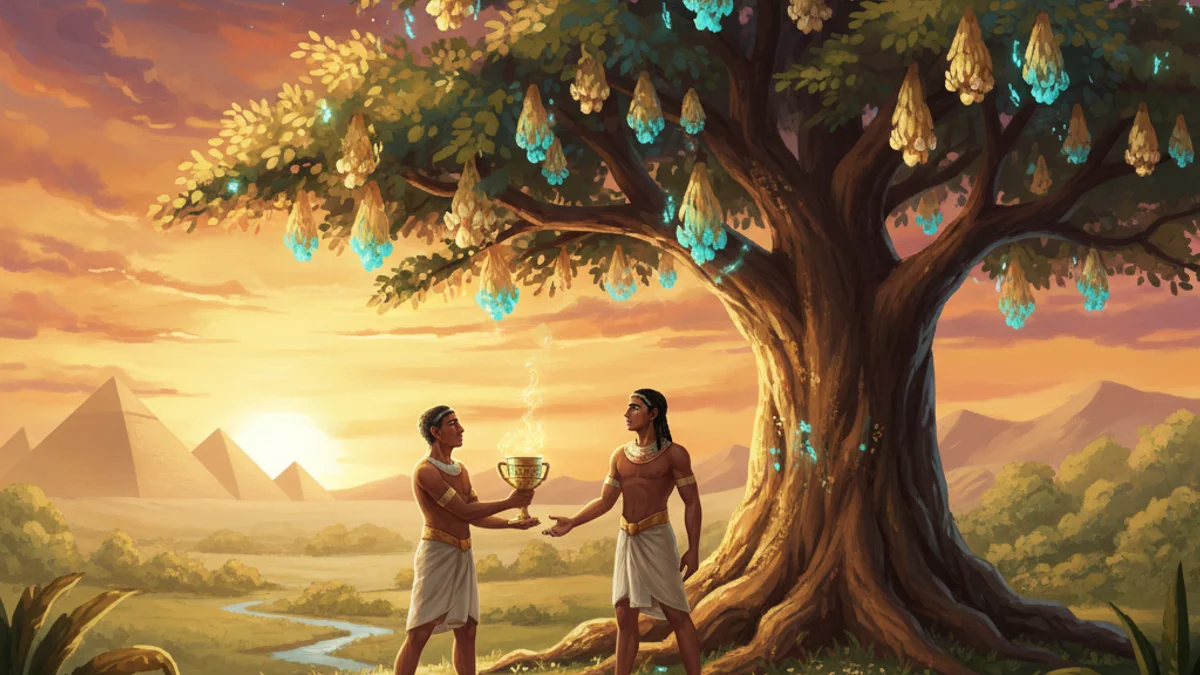
Anpu and Bata were two brothers who lived in harmony until Anpu's wife, consumed by desire, attempted to seduce Bata. When he refused, she falsely accused him of assault. Fearing his brother's wrath, Bata fled, proving his innocence through a self-sacrificial oath before the gods. He retreated to the Valley of the Cedar, placing his heart atop a sacred blossom for safekeeping. Eventually, the gods created a wife for Bata, but she betrayed him to the Pharaoh, leading to Bata's death. Anpu, realizing the truth of his wife's deception, set out to find his brother's heart. After years of searching, Anpu resurrected Bata. Through a series of magical transformations—first as a sacred bull and then as two Persea trees—Bata finally achieved justice. He was reborn as the Pharaoh's son, eventually ascending the throne and reuniting with his loyal brother Anpu, proving that truth and the soul cannot be permanently destroyed.
The Moral
Truth and loyalty will eventually overcome deception, even if the journey requires great sacrifice and transformation.
“See, I shall place my heart upon the top of the flower of the Cedar.”
Fun Fact
The earliest known version of this story is found on the D'Orbiney Papyrus, written by the scribe Ennana during the reign of Seti II around 1200 BCE.
Frequently Asked Questions
What is the moral of The Two Brothers?
The moral is that integrity and the bond of brotherhood are sacred. Despite the interference of lies and betrayal, the truth eventually surfaces, and divine justice restores those who are righteous.
Who are Anpu and Bata in Egyptian mythology?
Anpu and Bata represent the archetype of the two brothers. Anpu is often associated with the funerary god Anubis, while Bata is a regional deity; together, their story explores themes of agriculture, family, and the afterlife.
Is this story related to the biblical story of Joseph?
Many scholars note striking similarities between the 'Potiphar's Wife' episode in the Bible and the scene where Anpu's wife falsely accuses Bata, suggesting a shared folkloric motif in the ancient Near East.
What is the significance of the heart in the story?
The heart represents the essence of life and the soul. By placing it in a cedar tree, Bata demonstrates the Egyptian belief in the vulnerability and the resilience of the spirit through magical preservation.
How does Bata transform throughout the legend?
Bata undergoes several reincarnations, transforming from a man into a sacred Apis bull, then into two towering Persea trees, and finally being reborn as a human prince to reclaim his rightful place.
What happened to Anpu's wife at the end?
In most traditional versions, once Anpu discovers her treachery and Bata's innocence, he executes his wife as punishment for her lies, restoring the balance of Ma'at or cosmic justice.