Story Summary
Discover the legend of The Great Kurultai, where Temüjin united the Mongol tribes to become Genghis Khan, marking the birth of the world's largest empire.
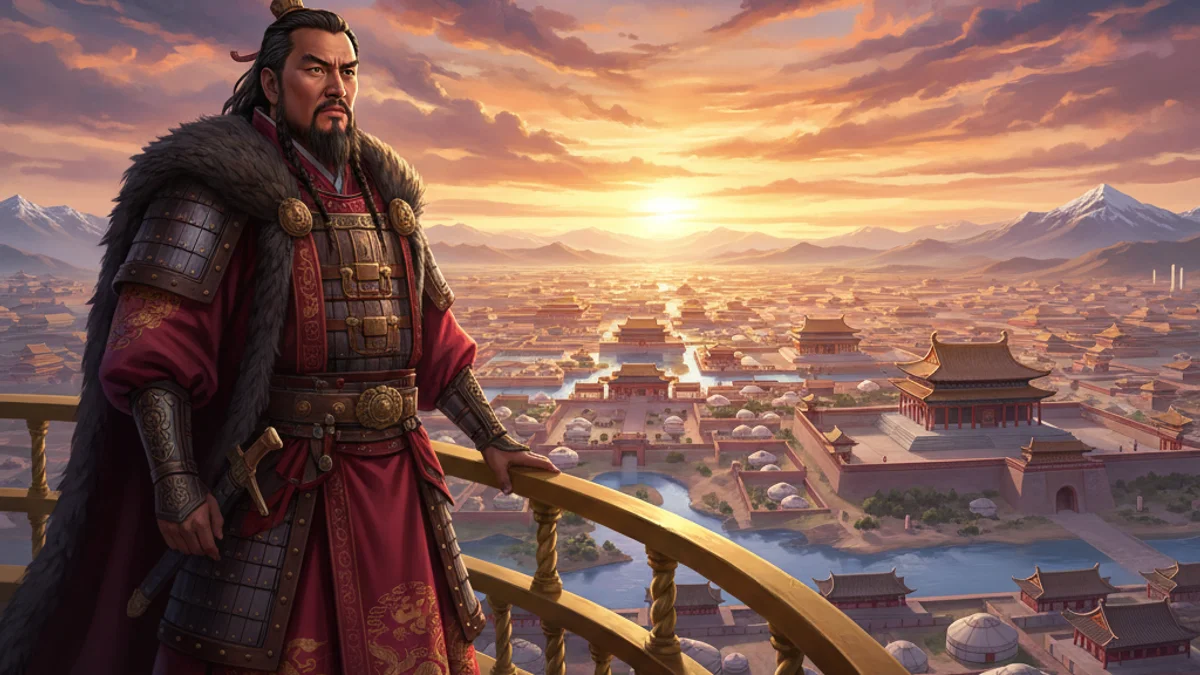
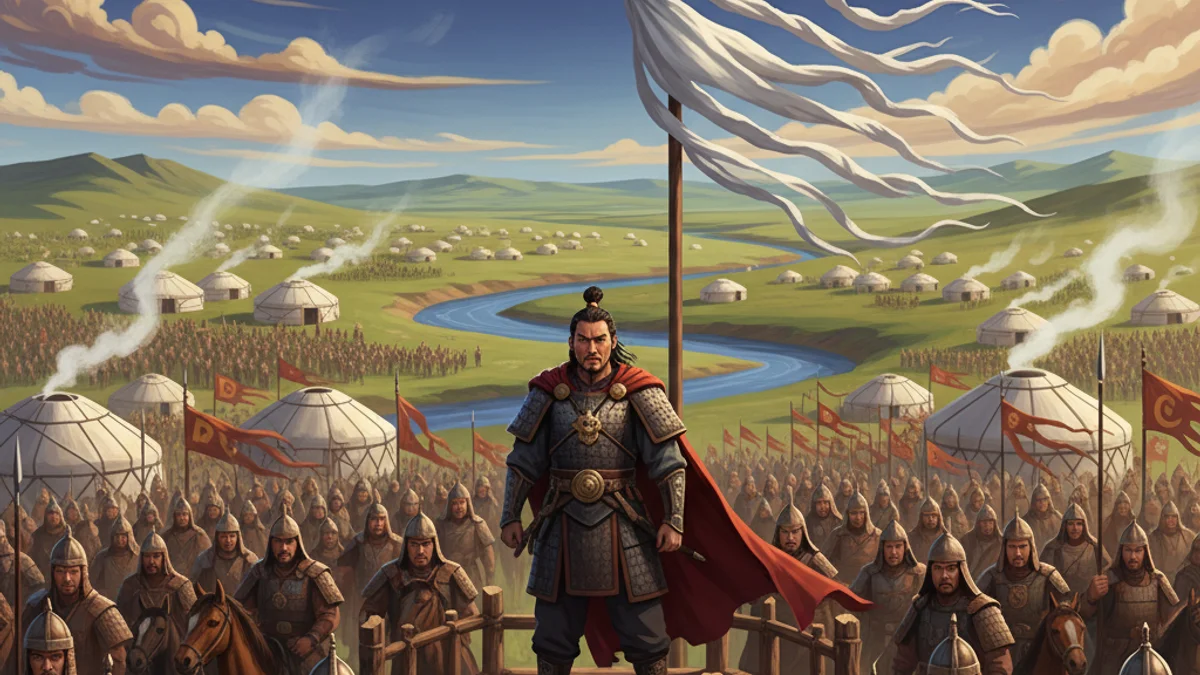
In the year 1206, at the headwaters of the Onon River, the scattered and warring tribes of the steppe gathered for a momentous council known as the Kurultai. After years of bitter conflict and shifting alliances, Temüjin had successfully subdued his rivals, bringing the nomadic clans under a single vision. Amidst a sea of white gers and the rhythmic thundering of hooves, the tribal leaders raised the 'Sulde'—a white spirit banner adorned with nine yak tails. There, with the blessing of the Eternal Blue Sky, they proclaimed Temüjin as Genghis Khan, the Universal Ruler. This gathering was the formal birth of the Mongol nation. Beyond the coronation, the Great Khan established the Yassa, a code of law that turned chaotic blood feuds into a disciplined society. By merging disparate tribes into one unstoppable force, the Kurultai proved that the power of a unified people could reshape the boundaries of the known world.
The Moral
True strength and lasting success are built upon the foundations of unity, shared law, and a common purpose.
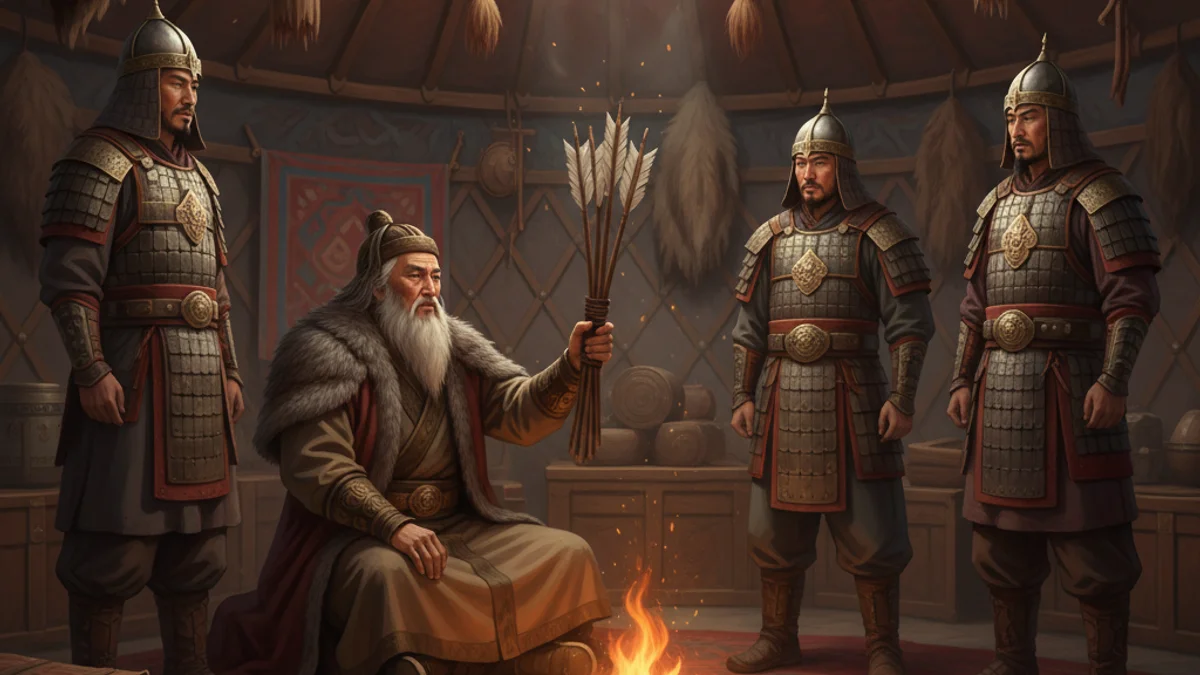
“Strength is found not in the number of arrows, but in the single bow that releases them all.”
Fun Fact
The 1206 Kurultai is historically regarded as the founding moment of the Mongol Empire, which eventually covered nearly 12 million square miles.
Frequently Asked Questions
What is the moral of The Great Kurultai?
The story teaches that fragmented groups can achieve greatness only through unity and a shared vision. It highlights how a single leader's ability to unify rivals can change the course of human history.
What does the term Kurultai mean?
A Kurultai was a political and military council used by ancient Mongol and Turkic chieftains. It served as a supreme assembly for electing leaders, declaring war, or making major legal decisions.
Why was Temüjin given the title Genghis Khan?
The title 'Genghis Khan' translates to 'Universal Ruler' or 'Oceanic Ruler.' It was bestowed upon him to signify his absolute and undisputed authority over all the unified tribes of the Mongolian plateau.
What was the significance of the Yassa code?
The Yassa was the secret code of laws established by Genghis Khan. It was crucial because it replaced tribal blood feuds with a centralized legal system, ensuring order and loyalty within the empire.
What is the significance of the white banner with nine tails?
Known as the 'Sulde,' the white banner represented the guardian spirit of the Mongols. The nine yak tails symbolized the unification of the primary tribes under one peaceful and protective rule.
How did the Kurultai change world history?
The Kurultai of 1206 transformed the nomadic Mongols into a centralized state. This unification allowed them to eventually create the largest contiguous land empire in history, connecting the East and West.