Story Summary
Explore the Maori creation myth The Children of Rangi and Papa. Learn how Tāne Mahuta separated the Sky Father and Earth Mother to bring light to the world.
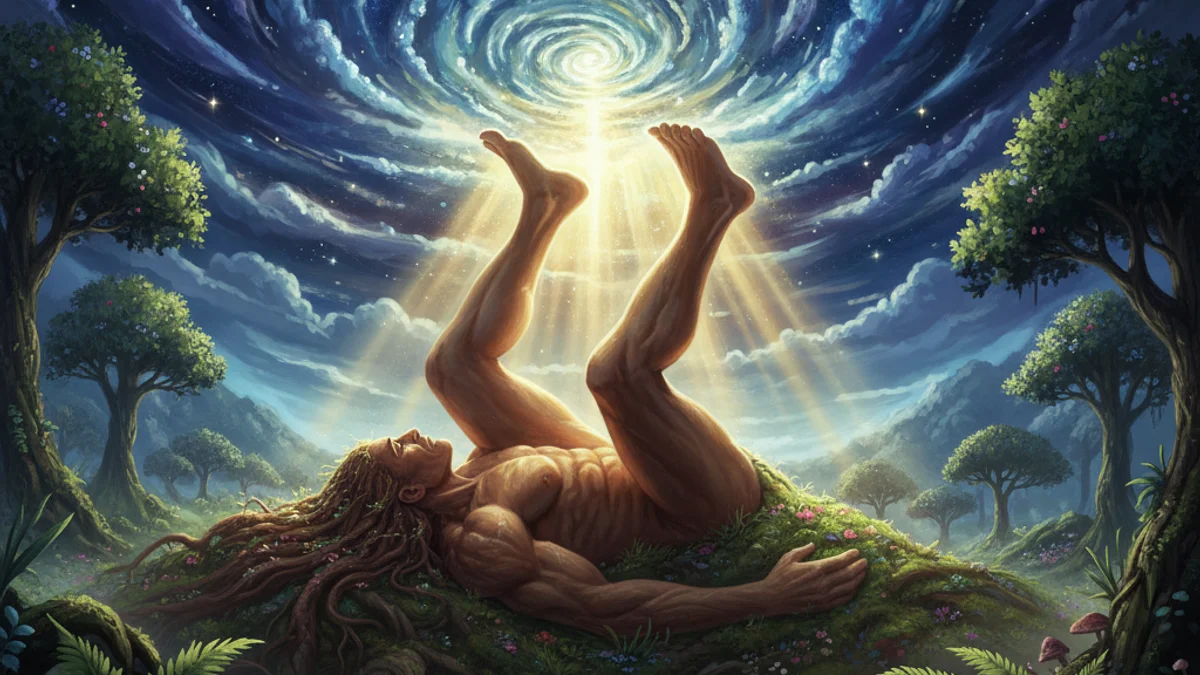
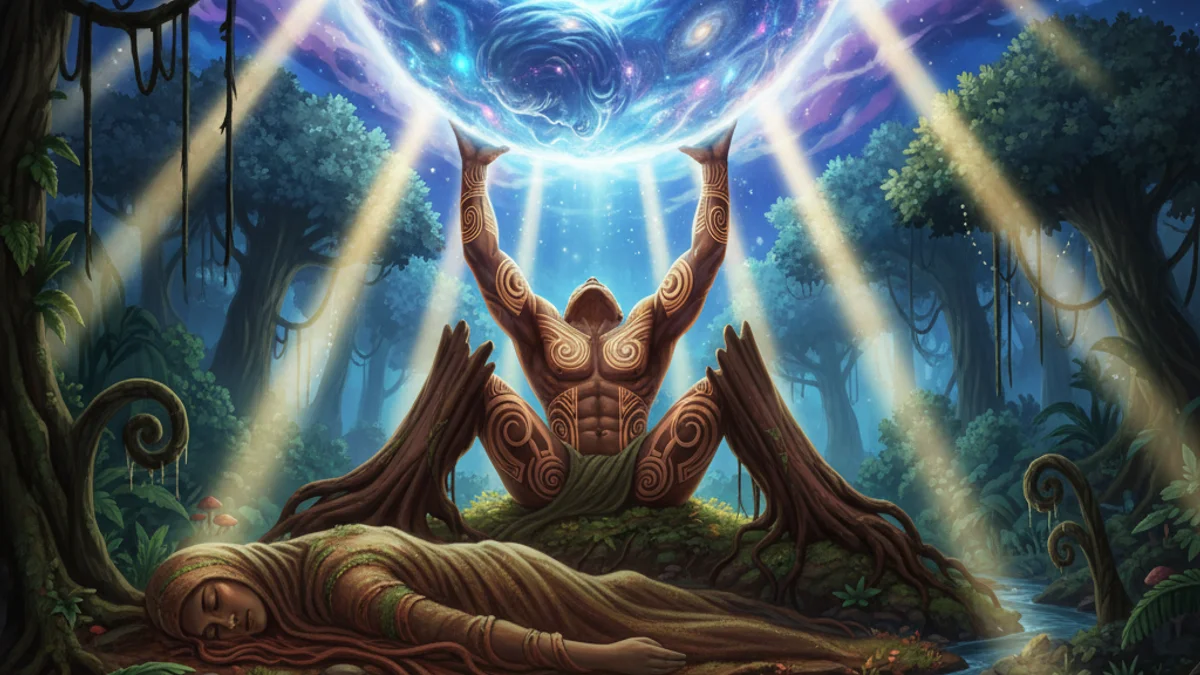
In the beginning, Rangi-nui, the Sky Father, and Papatūānuku, the Earth Mother, were locked in a tight, eternal embrace. Their many children were forced to live in the cramped, lightless void between their parents' bodies. Tired of the darkness, the brothers debated how to bring light into their world. Tūmatauenga, the god of war, suggested killing their parents, but Tāne Mahuta, the god of forests, proposed a gentler path: to push them apart so the sky would be above and the earth below. One by one, the brothers tried to separate them and failed. Finally, Tāne placed his shoulders against his mother and his feet against his father. With a monumental surge of strength, he thrust his legs upward, breaking the embrace. Light flooded the world for the first time. However, Tāwhirimātea, the god of storms, was furious at the separation. He fled to the sky to join his father, from where he continues to lash the earth with wind and rain in his grief. To this day, Rangi’s tears fall as rain for his lost wife, while Papa’s sighs rise as mist toward the heavens.
The Moral
Growth and enlightenment often require the pain of separation and the courage to transform one's environment.
“By the strength of his back and the power of his legs, Tāne brought the first dawn to the world.”
Fun Fact
In Maori culture, the morning mist is believed to be the soft sighs of Papatūānuku (the Earth) rising up to show her eternal love for Rangi-nui (the Sky).
Frequently Asked Questions
What is the moral of The Children of Rangi and Papa?
The story teaches that progress and the pursuit of light often involve difficult sacrifices and the necessity of change. It illustrates that individual growth sometimes requires breaking away from foundational bonds to create space for life to flourish.
Who finally separated Rangi and Papa?
Tāne Mahuta, the god of forests and birds, succeeded where his brothers failed. He used his strong legs to push his father, the Sky, away from his mother, the Earth.
Why did Tāwhirimātea fight his brothers?
Tāwhirimātea, the god of weather and storms, was the only brother who did not want his parents to be separated. He was angered by the act and chose to follow his father into the sky to wage war on his siblings.
What does the rain represent in Maori mythology?
Rain is seen as the tears of Rangi-nui, the Sky Father. He continues to weep for his beloved Papatūānuku, from whom he was forcibly parted at the beginning of time.
What was the world like before the separation?
The world was a state of perpetual darkness known as Te Pō. There was no space for movement or growth because the Sky Father and Earth Mother were joined in a constant embrace.
Who is Tūmatauenga in this story?
Tūmatauenga is the god of war and the ancestor of humanity. In the myth, he was the brother who advocated for killing their parents rather than just separating them.