Story Summary
Explore The Tailor's Reward, a poignant Jewish folklore tale where a humble tailor bargains with God for mercy, teaching a lesson on forgiveness and faith.
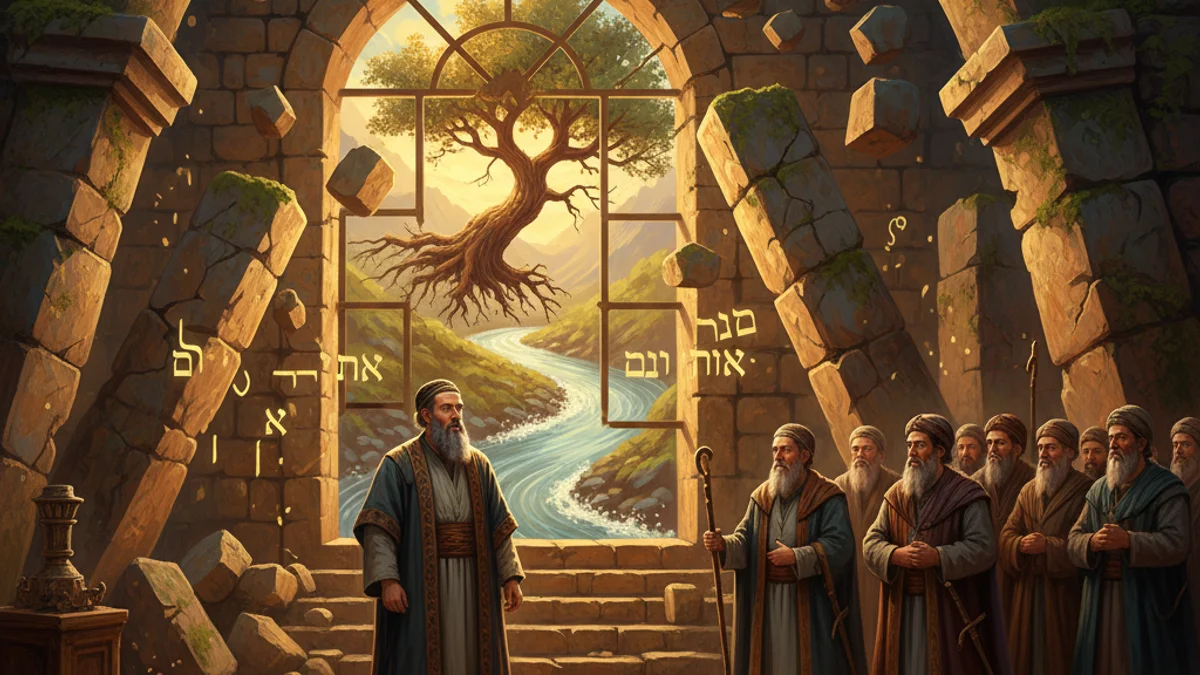
In a small, dusty shtetl, there lived a humble tailor who was as honest as his poverty would allow. On the eve of Yom Kippur, the Day of Atonement, while the rest of the village crowded into the synagogue, the tailor remained in his workshop. He pulled out two ledgers: one containing his own minor transgressions—scraps of cloth he had kept for himself or moments of impatience—and the other, a list he had kept of the 'sins' of the Almighty. 'Lord,' the tailor spoke aloud to the empty room, 'I have taken what wasn't mine and worked when I should have prayed. But You, Master of the Universe, have taken bread from the mouths of children and allowed the righteous to suffer. Today, I propose a bargain: if You forgive my small sins, I will forgive Your great ones.' He closed his books and sighed. In that moment, it is said that a heavenly voice echoed through the rafters, declaring that the tailor’s simple, honest bargain had opened the gates of mercy for the entire world.
The Moral
Divine forgiveness is a reflection of human mercy, teaching us that a sincere heart and an honest relationship with God are more powerful than ritual alone.
“If You forgive me for my small sins, I will forgive You for Your great ones.”
Fun Fact
This story is a classic example of 'holy chutzpah,' a cultural concept where humans hold God accountable to His own standards of justice and mercy.
Frequently Asked Questions
What is the moral of The Tailor's Reward?
The story teaches that God values the sincerity of the heart over perfect adherence to ritual. It suggests that mercy is a reciprocal relationship between the Creator and the created.
Which Jewish holiday is central to this story?
The story takes place on Yom Kippur, the Day of Atonement, which is the holiest day in Judaism dedicated to repentance and fasting.
Who is the tailor in Jewish folklore?
The tailor often represents the 'simple man' in Jewish tales—someone who may not be a scholar but possesses profound, innate spiritual wisdom and integrity.
What does 'Holy Chutzpah' mean in this context?
It refers to the tailor’s daring act of arguing with God, a recurring theme in Jewish tradition where one challenges the Divine out of a sense of justice and love.
Why did the tailor forgive God?
The tailor recognized the immense suffering in the world and used his own small mistakes as a bridge to ask God for universal compassion for all of humanity.
Is this story part of the Hasidic tradition?
Yes, stories of individuals arguing for the sake of the community are common in Hasidic lore, often attributed to figures like Rabbi Levi Yitzchak of Berditchev.